 FBR Updates
Filing your first tax return can feel like walking into an exam you didn't study for. The portal looks unfamiliar and the terms sound heavy. Everyone seems to have a different opinion about what you "must" do.
It's much simpler than it looks. If you have a CNIC, a mobile number, and your income papers, you can file your own return on FBR's IRIS portal in an afternoon.
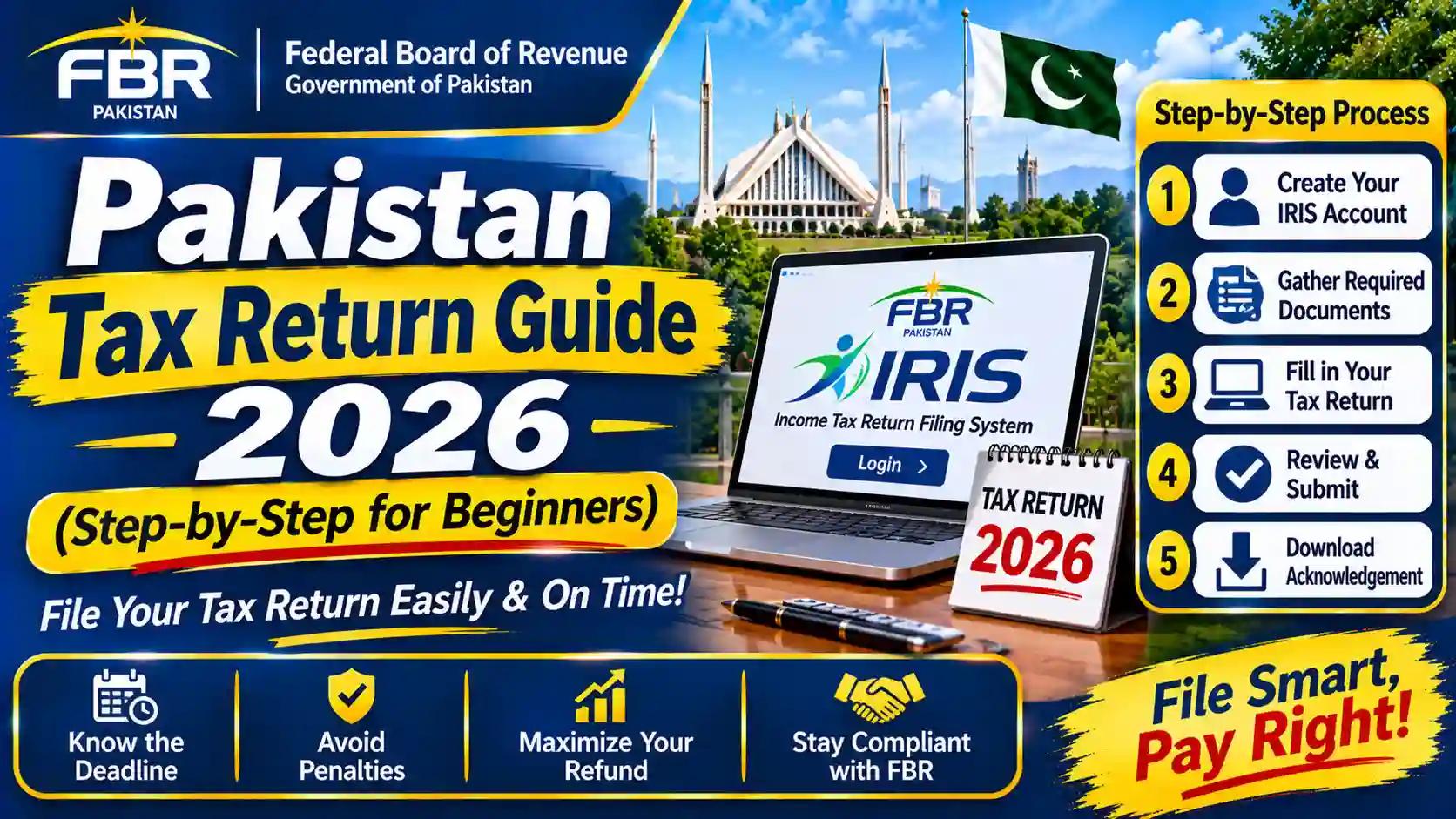
This guide explains how to file an income tax return in Pakistan for tax year 2026, step by step, in plain English. You'll learn who must file and which documents to collect. You'll also see how to fix the errors people hit most often.
Quick Answer: How Do You File an Income Tax Return in Pakistan?
To file an income tax return in Pakistan, register on the FBR IRIS portal with your CNIC, mobile number, and email. Log in and open the income tax return for tax year 2026. Fill in your income, deductions, tax paid, and wealth statement, then submit with your verification code. Save the acknowledgement. You'll appear on the Active Taxpayer List (ATL) once FBR updates it.
That's the whole process in four sentences. The rest of this guide walks through each step so nothing surprises you.
What Is an Income Tax Return in Pakistan?
An income tax return is a yearly statement you give the Federal Board of Revenue (FBR). It tells FBR three things: how much you earned, how much tax you already paid, and what you own.
It's the legal "return of income" described in Section 114 of the Income Tax Ordinance, 2001. A return does not always mean you pay more tax. For many salaried people, the employer has already deducted tax, and the return simply reports it.
A return does three practical jobs:
- It makes you a filer and puts you on the Active Taxpayer List.
- It proves your income for visas, bank loans, and property deals.
- It can help you claim a refund if too much tax was taken.
If you want the bigger picture on how Pakistan's system works, our guide on direct vs indirect tax in Pakistan is a good starting point.
Who Must File an Income Tax Return in Pakistan?
Many people assume only business owners file. That's not true. Under Pakistan's tax law, you generally need to file if any of these apply to you:
- You earn a taxable salary above the exemption threshold.
- You run a business, shop, or company.
- You earn from freelancing or online work.
- You receive rental income.
- You own property, a vehicle above a certain value, or other assets that trigger the filing rule.
- You were a filer last year.
- You hold a National Tax Number (NTN).
Even people with no taxable income often choose to file. Filing makes you an active filer, and non-filers pay higher withholding tax on bank transactions, vehicles, and property. Our filer vs non-filer breakdown for 2026 shows how big the difference can get.
What About Housewives and Students?
A housewife or student with no income is not forced to file in most cases. But if you own property, receive rent, or want filer status for a bank or a visa, you can file a return with no income (a nil return). Many families do this for property purchases.
What About Overseas Pakistanis?
Overseas Pakistanis may need to file if they earn income in Pakistan, such as rent. Special rules apply to non-resident Pakistanis. We've covered them in detail in our overseas workers tax and NRP rules guide.
Tax Year 2026 and the Deadline
"Tax year 2026" confuses a lot of beginners. In Pakistan, it means the income you earned between 1 July 2025 and 30 June 2026. That is financial year 2025-26.
The IRIS portal banner for this year said:
"Dear taxpayer! Please file your income tax return for FY-2026 at the earliest. The last date to file return is 30th September, 2026."
So the standard deadline for individuals was 30 September 2026. FBR sometimes extends the date, usually under Section 119 of the ordinance. If you've missed it, don't panic. File as soon as you can, because the penalty grows with delay.
We explain the dates and any extensions in our FBR income tax return deadline 2026 guide. To understand why FBR keeps moving the date, read why FBR extends tax return deadlines.
What You Need Before You Start
Spend ten minutes gathering these items. It will save you an hour of stopping and starting.
Identity and access
- Your CNIC (original number, valid).
- A mobile number registered in your own name.
- A working email address.
- Your NTN, if you already have one. If not, you'll create it during registration.
Income papers
- Salary certificate or annual salary slips.
- Tax deduction certificate from your employer.
- Business income details and bank statements.
- Rental agreements and rent receipts.
- Freelance income records and payment receipts.
Asset and expense papers
- Bank account details and balances on 30 June 2026.
- Property documents and vehicle registration details.
- Utility bills (many people forget these, but they appear in expense details).
- Previous year's return and wealth statement.
Tax already paid
- Withholding tax statements from banks, telecom companies, and employers.
- Advance tax challans, if any.
If you're missing a tax deduction certificate, ask your employer's finance team. You'll need it.
Step 1: Get Your NTN and Register on the IRIS Portal
IRIS is FBR's online portal for tax returns. The older name you may still see is e-FBR, and the new version is IRIS 2.0. To understand the difference, see eFBR vs IRIS or what the FBR IRIS portal is.
If you've never registered, here is how to start:
- Open the official IRIS portal.
- Choose the new registration option for an individual.
- Enter your CNIC, mobile number, and email.
- Enter the verification code (OTP) sent to your phone.
- Complete the profile with your name, address, and income type.
- Wait for your NTN and login PIN to arrive by SMS or email.
Already registered but forgot your NTN? Our guide on how to check your NTN with CNIC online shows how to find it in two minutes. For the full process of getting one, see how to get an NTN in Pakistan.
Login Troubles?
Not receiving the OTP or locked out? You're not alone. These are the most common portal complaints. Our guide to FBR IRIS login problems and solutions covers password resets, OTP delays, and browser issues. For a first walkthrough, see the FBR IRIS login guide.
Tip: Use a desktop or laptop with Chrome or Edge. Avoid filing during the last week before the deadline, when the portal slows down.
Step 2: Log In and Open the Return for Tax Year 2026
Once you're in, find the income tax return option on your dashboard. IRIS menus change slightly between versions. If the label looks different, look for a "Declaration" or "Income Tax Return" path.
- Log in to IRIS with your NTN or CNIC and password.
- Open the Declaration menu.
- Choose Income Tax Return.
- Select the tax year 2026.
- Pick the form that matches you (individual, AOP, or company).
If the return is for the right person and year, a draft form opens. You'll see several tabs, so take them one at a time.
For a tour of the newer layout, our IRIS 2.0 navigation guide and the IRIS 2.0 survival guide for tax season are worth a skim first.
Step 3: Fill In Your Income
This is the part that worries people most. It helps to remember a simple rule: declare what you earned, and match it to your documents.
If You Are a Salaried Person
- Enter your annual salary from your salary certificate.
- Add allowances and bonuses.
- Enter the tax your employer deducted.
- Check that the numbers match your tax deduction certificate.
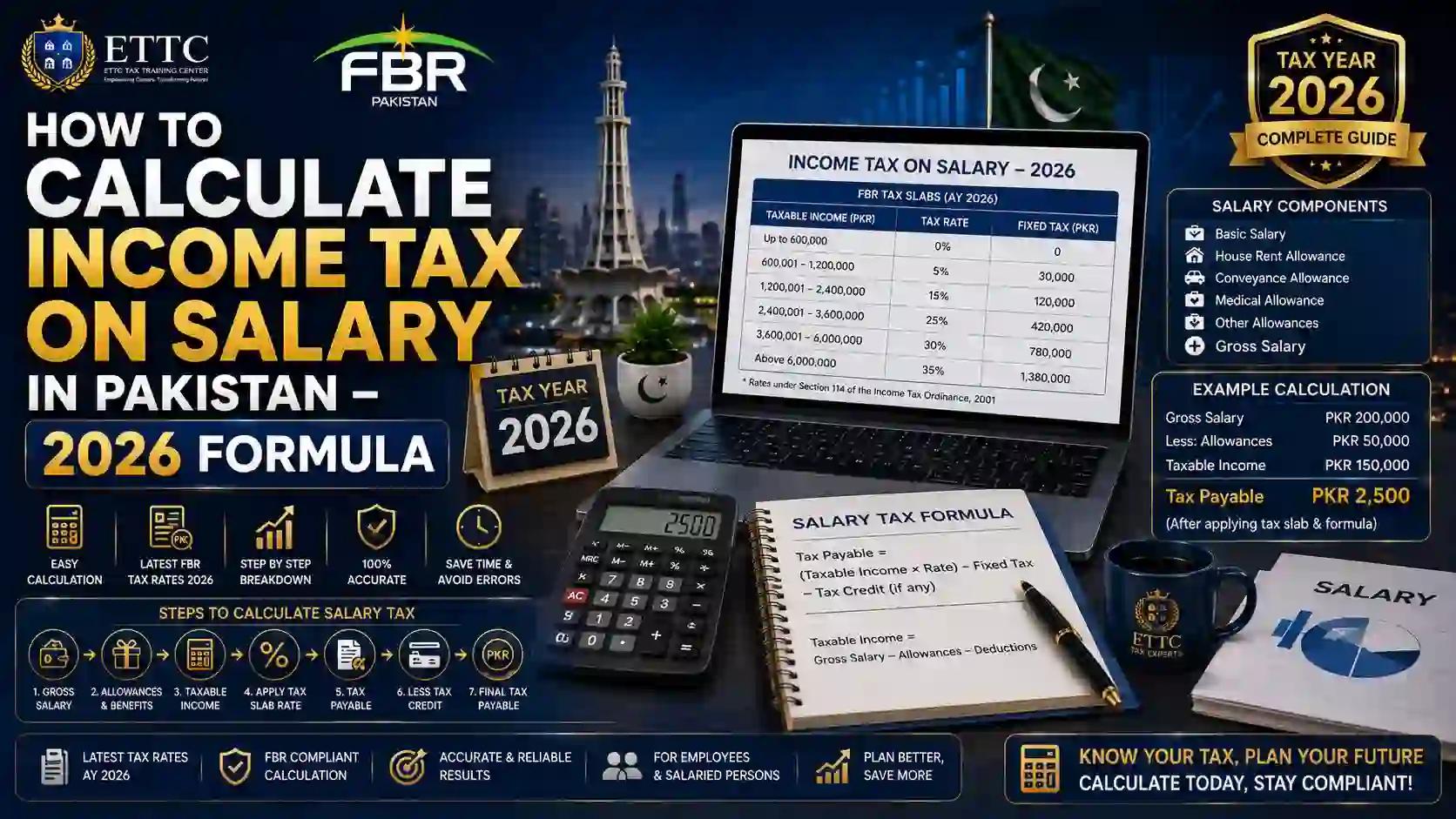
Your tax depends on slabs. For tax year 2026, the first part of your salary up to Rs 600,000 is generally not taxed, and higher incomes move through rising slabs. Slabs change with every budget, so confirm the latest figures in our income tax slabs for salaried persons guide. You can also try the salary income tax calculator or read how to calculate income tax on salary in 2026.
For a salaried-specific walkthrough on the new portal, see our IRIS 2.0 salaried tax return guide.
If You Run a Business or AOP
- Enter total business income and allowable expenses.
- Add your net profit.
- Use the business and AOP tax calculator to estimate your tax first.
- Keep invoices and books ready in case FBR asks.
Some business returns also ask for auditor details. If the portal says auditor details are required, it means your category needs them before submission.
If You Are a Freelancer
- Enter your foreign or local freelance income.
- Add the tax withheld by banks or payment platforms.
- Keep proof of every inward remittance.
Freelancers have special rules, which we cover in freelancer tax in Pakistan 2026 and income tax for freelancers and online earnings.
If You Earn Rental Income
- Enter the gross annual rent you received.
- Subtract the allowed deductions.
- Add any tax already withheld by a tenant.
Rental tax works on its own slabs. See tax on rental income in Pakistan, or test numbers with the rental income tax calculator.
If You Have More Than One Income Source
Many people have a salary plus rent, or a job plus freelance work. Each source has its own place in the return. Our guide to multiple income sources and FBR tax rules shows how to list them without double counting.
Other Income You Shouldn't Forget
- Profit on bank deposits.
- Prize bonds and lottery winnings (see tax on prize bonds).
- Capital gains on shares or property (see capital gains tax in Pakistan).
- Agricultural income (see agricultural income tax).
- Crypto gains (see crypto tax in Pakistan).
Step 4: Add Deductions, Credits, and Tax Already Paid
This tab can lower your final tax, so don't rush it.
Look for:
- Zakat paid under the law. See zakat deduction under Pakistan's income tax law.
- Education expenses that may qualify for a credit. See education tax credit eligibility.
- Withholding tax already collected on your bank, mobile, vehicle, and other payments. Our FBR withholding tax rates guide and the newer withholding tax Pakistan 2026-27 guide help you see what was taken.
- Advance tax you paid during the year. See advance tax in Pakistan.
Matching your withholding statements with the portal is the best habit you can build. If the numbers differ, find out why before you submit.
Step 5: Complete the Wealth Statement
The wealth statement lists what you own and owe on 30 June 2026. It's required under Section 116 for most individual filers.
You'll usually enter:
- Bank balances and cash.
- Property and plots.
- Vehicles.
- Investments, shares, and savings schemes.
- Loans you owe.
- Personal items of value.
Then comes wealth reconciliation. This shows how your assets grew compared with last year, based on income, spending, and gifts. If the numbers don't balance, FBR may ask questions.
Plain-English tip: Think of it as a before-and-after photograph of your finances. The reconciliation explains what changed between the two.
Don't guess. A step-by-step walkthrough is in our wealth statement filing guide for tax year 2026.
Step 6: Review the Tax Computation
Before you submit, the portal calculates your tax. Check these four lines:
- Taxable income: Does it match your documents?
- Tax chargeable: Does it look reasonable for your slab?
- Tax paid or withheld: Is it fully counted?
- Refund or payable: Is it what you expected?
If a large amount is payable, you can pay by challan and then enter it. If you expected a refund, read our guide to claiming a tax refund from FBR before you submit.
Higher-income individuals may also face an extra levy. Check our super tax guide if your income is large.
Step 7: Submit and Save Your Acknowledgement
When everything looks right, click Submit. The portal asks for a verification code sent to your registered mobile or email.
After a successful submission:
- Download the acknowledgement receipt and the filed return as PDFs.
- Save copies in a folder on your computer and in cloud storage.
- Note the date and time of submission.
Banks, embassies, and property offices often ask for these two files. Keep them for at least six years.
Step 8: Check That You're on the Active Taxpayer List
Filing does not make you "active" the same minute. FBR updates the Active Taxpayer List (ATL) on a schedule, and your name should appear after it processes your return.
Check your status using our guide to the FBR Active Taxpayer List. If you want the complete picture of getting and keeping filer status, read how to become an active tax filer in Pakistan.
If you want to see how much money active status saves, try the income tax return filer benefit calculator.
Special Cases Beginners Often Ask About
Filing a Nil Return
A nil return means you had no taxable income but still file to stay on the ATL. It's allowed. You still need to complete the wealth statement if you own assets.
Filing From Mobile
You can open IRIS on a phone, but the experience is awkward and mistakes are common. A laptop is much safer.
Filing Without a Tax Consultant
Yes, you can file yourself. Many salaried individuals do. A consultant adds value when you have several income streams, foreign assets, a business, or a notice from FBR.
If you aren't sure which professional you need, our comparison of tax consultant vs tax lawyer in Pakistan helps you choose.
Companies and SECP
Companies file differently from individuals and also deal with the SECP. See SECP vs FBR filing differences, and if you're starting a business, read how to open a tax file for a company.
Sales Tax Is Separate
Income tax and sales tax are two different returns. If you sell goods or services, you may also need a monthly sales tax return. Start with sales tax in Pakistan explained and how to file a monthly sales tax return.
Common IRIS Errors and How to Fix Them
These are the messages beginners search for most.
"Submission not allowed" or "notified for review only"
This usually means the return is in a state that needs review or a different action before final submission. Recheck that you picked the right tax year and form. Make sure every required tab is complete. If it persists, contact FBR support or a professional.
"Submission of the revised return is not allowed unless the return is modified"
IRIS blocks a revision if you haven't changed anything. Edit at least one field that actually needs correcting, then resubmit.
"Auditor details are required for filing"
Some taxpayer categories must add at least one auditor before they can proceed. Add the details, then continue.
OTP not received
Check that the mobile number is registered under your CNIC. Wait a few minutes, then try again.
Portal not working today
IRIS slows down near deadlines. Try early morning or late night.
More portal fixes are in our FBR IRIS login problems guide.
How to Revise a Return After Filing
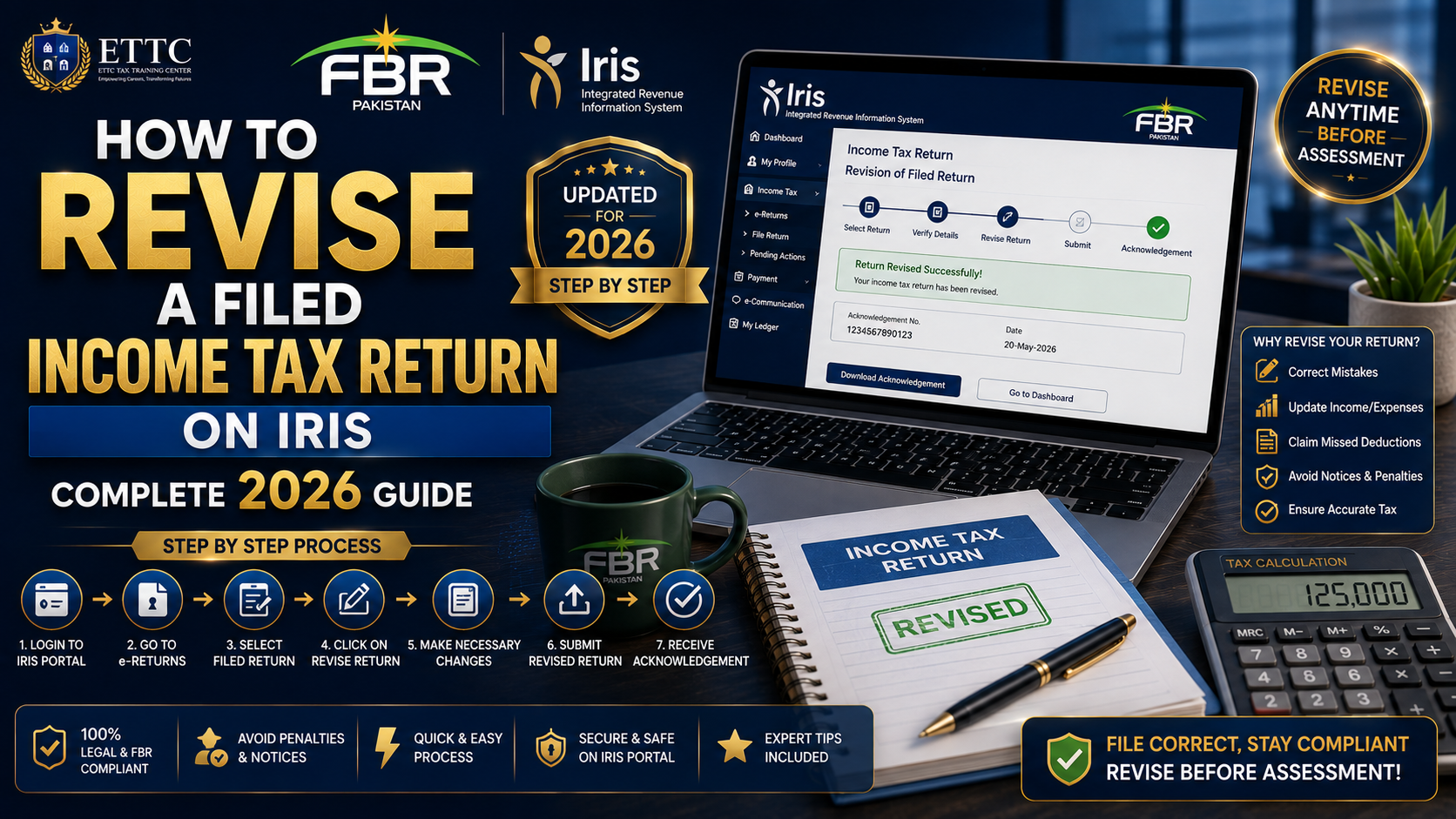
Made a mistake? You can fix it. A revised return is allowed under Section 114(6), within the time limit the law sets, and often needs FBR's approval.
The short version:
- Log in and open your filed return.
- Choose the revise option.
- Correct the wrong figures.
- Add a reason for revision.
- Resubmit.
Our full tutorial, how to revise an income tax return on IRIS, covers documents, time limits, and the mistakes that get a revision rejected.
What Happens If You Miss the Deadline?
Late filing doesn't end the world, but it costs you. Three things can happen:
- A penalty under the ordinance, which depends on your category and how late you are.
- Higher withholding tax on bank transactions, vehicles, and property, because you're treated as a non-filer.
- A possible notice from FBR.
The exact penalty amounts change with finance acts, so check the latest figures in our late income tax return penalty guide. If you receive a letter, don't ignore it. Read FBR tax notices explained and how to respond to an FBR audit notice.
How FBR Is Using Technology (And Why Accuracy Matters)
FBR now uses data matching and risk tools to flag returns that don't add up. Mismatches between your declared income and your bank, property, and vehicle records can trigger a review.
Learn more in our posts on FBR artificial intelligence in tax filing and the FBR Integrated Risk Management System. If a review does happen, our FBR tax audit process guide explains what to expect.
The takeaway: file honestly, keep your documents, and make sure your wealth statement matches reality.
Filing Help in Islamabad, Karachi, Lahore, Multan, and Other Cities
The IRIS portal is online, so you can file from anywhere in Pakistan. Whether you live in Islamabad, Rawalpindi, Karachi, Lahore, Multan, Faisalabad, Peshawar, Quetta, Sialkot, or Gujranwala, the steps above are the same.
What changes is the help you can reach. Some people prefer face-to-face guidance, especially for business returns, property deals, or notices. Local tax offices (RTOs and LTOs) handle matters in their own regions, and a good local advisor understands both the law and the day-to-day office process.
If you want to learn these skills yourself, ETTC runs practical FBR income tax training in three major cities:
Students from Multan and other cities can start with the main FBR income tax course and ask the team about the best way to join.
Five Beginner Mistakes to Avoid
- Waiting until the last week. The portal slows down and stress goes up.
- Using someone else's mobile number. OTPs go to the wrong person.
- Skipping the wealth statement. It's a major reason for notices.
- Ignoring withholding statements. You may pay twice or miss a refund.
- Not saving the acknowledgement. You'll need it more often than you think.
For a wider look at what goes wrong, read tax mistakes Pakistani businesses make in 2026.
What Changed in the Latest Budget?
Each budget can change slabs, rates, and rules. Before you file, scan our budget 2026-27 tax changes summary and the FBR tax reforms overview. It takes five minutes and can save you from using an outdated rate.
Want to Make Tax Filing Your Career?
Filing your own return is a useful life skill. Filing for others is a real career. Pakistan has a growing demand for people who understand IRIS, withholding, sales tax, and notices.
If that sounds interesting, here is where to look:
- How to become a tax consultant in Pakistan
- Tax consultant salary in Pakistan
- How to start a tax consultancy firm
- Certified tax advisor course in Pakistan
- Online vs physical tax courses
Why Choose ETTC?
Elite Tax Training Center (ETTC) teaches taxation through hands-on practice on real portal workflows, not just theory. You can learn why students pick us on our about page, meet the mentors, and browse every course. If you're comparing options in the capital, see our guide to the best tax institute in Islamabad and the best tax courses in Islamabad.
Ready to go deeper? Explore the Advanced taxation courses at Elite Tax Training Center (ETTC), including sales tax, withholding tax, and corporate tax planning.
Frequently Asked Questions
What is the last date to file an income tax return in Pakistan for 2026?
The standard deadline for tax year 2026 was 30 September 2026, as shown in the IRIS banner. FBR can extend it. If it has passed, file as soon as possible to limit penalties.
Who needs to file an income tax return in Pakistan?
Salaried people above the exemption threshold, business owners, freelancers, landlords, and holders of an NTN generally need to file. People who own certain assets may also be required to file.
How do I file my income tax return on IRIS step by step?
Register on IRIS, log in, open the income tax return for tax year 2026, fill in income, deductions, and tax paid, complete the wealth statement, review the computation, and submit with your verification code.
What documents do I need to file a tax return?
You need your CNIC, mobile number, email, NTN, salary or income records, tax deduction certificates, bank statements, property and vehicle details, and your previous return.
Can I file my tax return myself?
Yes. Many salaried individuals file on their own. Get professional help if you have a business, several income sources, foreign assets, or an FBR notice.
Is a salaried person required to file a return?
Yes, if their income is above the taxable threshold. Even when tax is deducted by the employer, a return is usually required to report it and to become a filer.
Do I need an NTN before I file?
Yes. Your NTN is created when you register on IRIS. See how to get an NTN.
How do I become an active filer?
File your return for the latest tax year. Once FBR updates the list, your name appears on the Active Taxpayer List.
Can I file a nil return?
Yes. A nil return is allowed if you have no taxable income, and many people file it to stay on the ATL.
Can overseas Pakistanis file a tax return online?
Yes, through IRIS, if they have income or assets in Pakistan. Special non-resident rules may apply.
How do I revise a return after filing?
Open the filed return on IRIS, choose revise, correct the figures, add a reason, and resubmit within the allowed time.
Why is IRIS not sending my OTP?
The mobile number may not be registered under your CNIC, or the system may be slow. Wait a few minutes, verify the number, and try again.
Conclusion: Take the First Step Today
Filing an income tax return in Pakistan is not as scary as it looks. Gather your documents, register on IRIS, fill the return one tab at a time, complete your wealth statement, and save your acknowledgement. Do it once, and the second year takes half the time.
If you'd rather learn the skill properly, or turn it into income, ETTC can help. Book a seat in the Advanced Taxation Course at ETTC, the best tax training institute for hands-on FBR and IRIS learning. Visit the courses page or contact us today.
Disclaimer: This guide is for general education and is not legal or tax advice. Tax rules and deadlines change. Confirm current details on the FBR website or with a qualified tax professional.
Written by
ETTC Team
Expert instructor at ETTC – Elite Tax Training Centre, helping professionals master practical taxation for global careers.