 Tax Tips
In 2026-27, a filer pays 1.25% advance tax when buying property (section 236K) and 2.75% when selling (section 236C). Non-filers pay 10.5% to 18.5% as buyers and 11.5% as sellers. Sellers may also owe capital gain tax, which is 15% of the gain for most filers on property bought after 1 July 2024.
Introduction
Property deals in Pakistan are never just about the price. The tax bill at the registry office can change the whole math of a purchase or a sale.
The good news is that Budget 2026-27 made things simpler. Filer rates are now flat. The old late-filer category is gone. Your filer status, however, matters more than ever.
This guide explains property tax in Pakistan 2026 in plain English. You will learn the buyer and seller rates, how capital gain tax works, what changes for overseas Pakistanis, and what to expect in Islamabad, Karachi, Lahore, Multan and other cities. We use real examples, so you can estimate your own bill before you visit the sub-registrar.
What Is Property Tax in Pakistan? (Three Taxes, Not One)
Many people say "property tax" and mean three different things. That is why online answers often look confusing.
- Advance tax on transfer. This is the federal tax collected at the time of registry. The buyer pays under section 236K. The seller pays under section 236C.
- Capital gain tax (CGT). This is tax on the seller's profit, not the full sale price.
- Provincial charges and annual property tax. These include stamp duty, registration fee, local transfer fees and the yearly tax collected by the provincial excise department.
Think of it like a restaurant bill. The advance tax is the amount collected at the table. The final tax is settled later when you file your return. For filers, advance tax is usually adjustable against your final income tax liability, so it is not always money lost.
If you want a deeper look at how advance taxes work in general, read our guide on advance tax in Pakistan and who pays when.
Property Tax Rates in Pakistan 2026-27 at a Glance
These rates apply from 1 July 2026 under the Finance Act 2026. The FBR's own explanation of the Finance Act 2026 confirms the flat 2.75% seller rate and the flat 1.25% purchaser rate for filers.
Buyer (section 236K):
Filer: 1.25% of fair market value, whatever the property value
Non-filer: 10.5% up to Rs 50 million, 14.5% from Rs 50 to 100 million, 18.5% above Rs 100 million
Seller (section 236C):
Filer: 2.75% of gross consideration
Non-filer: 11.5%
Capital gain tax (section 37):
Filer, property bought on or after 1 July 2024: 15% of the gain
Property bought earlier: a declining holding-period rate, reaching 0% after a set number of years
Two changes stand out compared with last year.
First, the filer slabs are gone. In 2025-26, a filer buyer paid between 1.5% and 2.5% depending on value. Now it is one flat rate.
Second, the late-filer tier is abolished. Last year, people on the Active Taxpayer List who filed late paid a middle rate. That category no longer exists. You are either on the list on the transfer date or you are not. For a refresher on what late filing can cost you, see our article on the late income tax return penalty in Pakistan.
You can also run your own numbers using the ETTC property transfer tax calculator.
Advance Tax on Buying Property in Pakistan (Section 236K)
Section 236K of the Income Tax Ordinance 2001 requires the registering authority to collect tax from the buyer at the time of transfer. In practice, you pay this through a challan before the registry or mutation (intiqal) is completed.
How the buyer's tax is calculated
The tax is charged on the fair market value of the property. That is usually the higher of two numbers: the price written in your sale deed, or the FBR's notified valuation for that area.
This is a point many buyers miss. If your deed says Rs 10 million but the FBR value is Rs 14 million, the tax is calculated on Rs 14 million.
Example 1: A filer buys a Rs 15 million house
1.25% of Rs 15,000,000 = Rs 187,500 advance tax
Example 2: A non-filer buys the same house
10.5% of Rs 15,000,000 = Rs 1,575,000 advance tax
The difference is Rs 1,387,500 on one transaction. And that is before stamp duty and other charges.
Example 3: A larger deal at Rs 120 million
Filer: 1.25% = Rs 1,500,000
Non-filer: 18.5% = Rs 22,200,000
At this level, being a non-filer is not a small penalty. It is a deal-changer.
Is the buyer's advance tax refundable?
For filers, section 236K is an advance tax. It counts toward your income tax for the year, so you can adjust it when you file your return. For non-filers, the high rate can act as a minimum tax, so recovery is much harder. Do not plan on getting it back.
Advance Tax on Selling Property in Pakistan (Section 236C)
Section 236C applies to the seller. The sub-registrar, housing society or transfer authority collects it before the transfer is recorded.
How the seller's tax is calculated
The base is the gross amount of consideration received. As with the buyer's side, authorities generally apply the higher of the declared price and the FBR value.
Example 4: A filer sells a Rs 15 million house
2.75% of Rs 15,000,000 = Rs 412,500
Example 5: A non-filer sells the same house
11.5% of Rs 15,000,000 = Rs 1,725,000
Notice something interesting. A flat 11.5% applies to non-filer sellers at every price level. Filer sellers now pay one flat 2.75%, no matter how expensive the property is.
Section 236C is not capital gain tax
This is the most common confusion. Section 236C is collected on the full sale price, even if you sold at a loss. Capital gain tax applies only to your profit. For a filer, the 236C amount is generally adjustable against the final tax calculated on your return.
Our dedicated guide on capital gains tax in Pakistan walks through the full calculation.
Capital Gain Tax on Property in Pakistan 2026
Capital gain tax, often called CGT or "gain tax", is charged on the profit you make when you sell. The formula is simple:
Capital gain = Sale price − Purchase price (and allowed costs)
What changes the rate is when you bought the property.
Property bought on or after 1 July 2024
If you are on the Active Taxpayer List on the date of sale, the CGT is a flat 15% of the gain. The holding period no longer reduces it.
Example: You bought a house in October 2024 for Rs 15 million and sold it in November 2026 for Rs 17.5 million. Your gain is Rs 2.5 million. CGT at 15% is Rs 375,000.
If you are not on the list, you are taxed at normal individual rates, with 15% as the minimum on the gain.
Property bought on or before 30 June 2024
Older purchases keep the holding-period scale. The longer you hold, the less you pay.
- Open plots: the rate starts at 15% and reduces each year, reaching 0% after more than six years.
- Constructed property: the rate reaches 0% after more than four years.
- Flats: the rate reaches 0% after more than two years.
Example: You bought a plot in March 2022 for Rs 6 million and sold it in September 2026 for Rs 9.5 million. The gain is Rs 3.5 million. You held it for about four and a half years, so the open-plot rate is 5%. CGT is Rs 175,000.
This is why the answer to "Is there capital gain tax on property held for more than four years?" is: it depends on the type and the purchase date. Constructed houses bought before July 2024 can fall to zero after four years. Open plots take longer.
Inherited property
The Finance Act 2026 also addressed inherited property. For an individual beneficiary, the fair market value at the time of transfer is treated as the cost for CGT purposes. In simple terms, you are not taxed on the appreciation that happened before you inherited it. A gifted or inherited property still needs correct documentation, so speak to a tax professional before you transfer.
You can estimate your own figure with the ETTC capital gains tax calculator.
Filer vs Non-Filer Property Tax in Pakistan
This is the heart of the matter, and the reason so many readers search for filer vs non-filer property tax Pakistan.
A filer is a person whose name appears on the FBR's Active Taxpayer List (ATL) on the date of the transaction. A non-filer is anyone who is not on that list. Having an NTN is not enough. You must have filed your return and appear on the current list.
What a filer saves on a Rs 30 million property
Buying as a filer: Rs 375,000
Buying as a non-filer: Rs 3,150,000
Difference: Rs 2,775,000
Selling as a filer: Rs 825,000
Selling as a non-filer: Rs 3,450,000
Difference: Rs 2,625,000
For most people, the cost of filing a return is tiny compared with these numbers. If you are planning any property move this year, becoming a filer is the single best tax decision you can make.
Can a non-filer buy property in Pakistan?
Yes, currently a non-filer can still buy property by paying the higher rates. Be careful, though. Reports around Budget 2026-27 mention possible restrictions on people who have not declared sufficient resources from acquiring very high-value property, above Rs 100 million. Because rules like this can change through notification, confirm the current position on the FBR website before a large purchase.
What if you file your return after the transfer?
Status is checked on the transfer date. Filing your return the week after your registry does not rescue that transaction. Plan ahead and check your status early.
Our full guide on filer vs non-filer in Pakistan 2026 covers other transactions beyond property, such as vehicles and bank withdrawals.
How to Check Your Filer Status Before a Property Deal
Do this at least a week before the registry. It takes five minutes.
- Open the FBR's Active Taxpayer List search page via the FBR website.
- Enter your CNIC or NTN.
- Check that your name shows as "Active" for the current period.
- Do the same for the other party if you are the seller and need to confirm the buyer's status, or vice versa.
- Save a screenshot or printout for your file.
If you are not on the list, see our step-by-step article on how to check the FBR active taxpayer list (ATL). If you do not yet have a number, start with how to get an NTN in Pakistan. You can also check your NTN with your CNIC online.
How to Become a Filer to Reduce Property Tax
If you are not on the list, here is the practical route.
- Register for an NTN through the FBR's IRIS portal.
- File your income tax return for the latest tax year, even if your income is low or you are a homemaker or student.
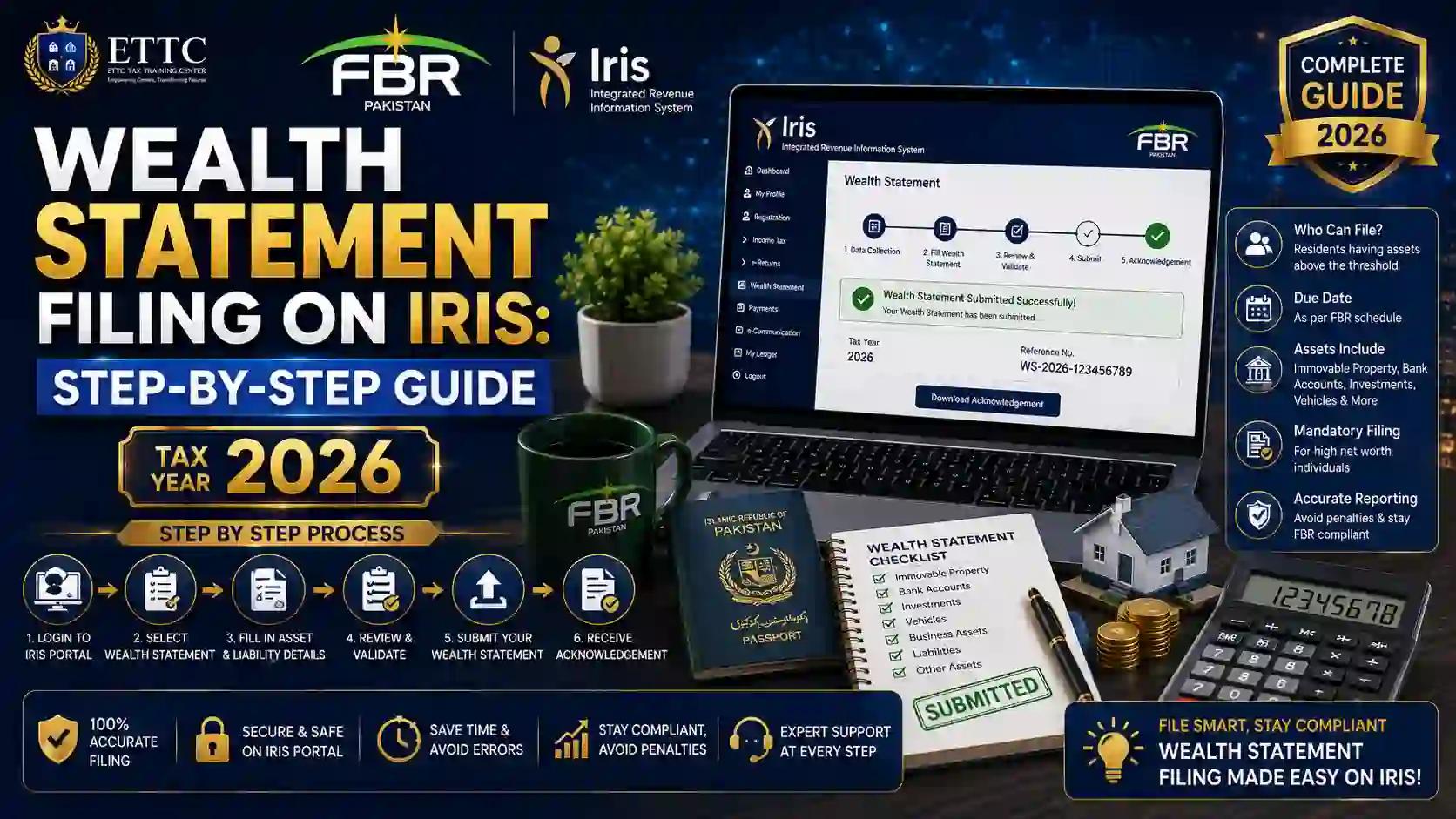
- File your wealth statement if required. Our guide on wealth statement filing in IRIS explains how.
- Wait for the list to update, then confirm your name appears.
For the full walkthrough, read how to become an active tax filer in Pakistan and how to file an income tax return in Pakistan. If you are new to the portal, our FBR IRIS portal guide will save you time.
FBR Value vs DC Rate: Which One Matters?
Pakistan has two sets of official property valuations, and they do different jobs.
- FBR valuation rates are used for federal taxes such as sections 236K, 236C and CGT.
- DC (Deputy Commissioner) rates are used mainly for provincial stamp duty and registration fees.
In April 2026, the FBR revised valuations downward by roughly 10% to 35% in several cities, including Islamabad, Rawalpindi, Faisalabad, Sialkot, Multan, Bahawalpur and Gujranwala. Lower FBR values reduce the tax base for 236K and 236C.
However, a lower FBR value does not automatically lower your stamp duty, because that follows the DC rate. And it does not mean property prices dropped. It only changes the tax calculation.
What happens if you declare a price below the FBR value?
The authority will normally apply the tax to the higher FBR value. Under-declaring the price does not save tax. It can also create trouble later, because the buyer's cost base for future CGT becomes unclear.
Stamp Duty, Registration Fee and Other Provincial Costs
Besides federal advance tax, buyers pay provincial and local charges. These are separate from FBR taxes and differ by province and city.
- Stamp duty is a provincial subject. It is usually charged as a percentage of the DC value or declared value.
- Registration fee is a smaller charge collected at registry.
- Local transfer fees are charged by authorities and societies, for example CDA, LDA or a private housing society.
- Annual property tax is collected by the provincial excise and taxation department and is separate from transfer taxes. For Islamabad, see our guide on excise and taxation Islamabad online verification and tax payment.
Rates change between years and between provinces, so confirm the current figure with the relevant office, such as Excise & Taxation Punjab or CDA in Islamabad.
About federal duties: the old 3% Federal Excise Duty on property purchase was withdrawn from 1 July 2025 as far as we know, but always confirm with your registrar, because buyers still hear about "FED" and "CVT" at the counter.
Total Cost of Buying Property: A Simple Worked Example
Let us put it all together for a Rs 20 million house.
Buyer (filer):
Section 236K at 1.25%: Rs 250,000
Stamp duty, registration and local fees: vary by city and province
Seller (filer), same sale:
Section 236C at 2.75%: Rs 550,000
CGT: depends on profit and purchase date
If the seller bought the property in 2025 for Rs 16 million, the gain is Rs 4 million, and 15% CGT is Rs 600,000. The 236C amount of Rs 550,000 already collected counts toward that, so the extra to pay at return time is small.
That is why sellers should keep their purchase deed, receipts and renovation records. Without proof of cost, a gain is hard to calculate fairly.
Property Tax for Overseas Pakistanis 2026
Overseas Pakistanis often worry they will be treated as non-filers. The FBR has a facility that lets holders of a NICOP or Pakistan Origin Card pay advance tax at the filer rate under sections 236C and 236K, even when they are not on the ATL. The FBR's FAQs on the filer rate under 236C and 236K explain how the system treats such cases.
Budget 2026-27 also abolished the capital value tax on foreign assets held by resident Pakistanis, which is a separate relief.
Practical tips for overseas buyers and sellers:
- Keep your NICOP or POC copy ready for the registrar.
- Use a trusted local representative with a properly attested power of attorney.
- Check whether your foreign income needs reporting in Pakistan. Our article on Pakistani overseas workers and FBR NRP rules is a useful starting point.
Rental Income From Property You Own
Tax does not end at purchase. If you rent out your property, the rent is taxable income. Rates and rules depend on your income level and whether you are an individual or a company. Read our tax on rental income in Pakistan guide and try the rental income tax calculator.
You may also hear about "deemed rental income" under section 7E, a charge on the value of certain property. Some reports say Budget 2026-27 removed it, others say it changed. Check our explainer on section 7E tax for property owners in Pakistan and the latest FBR notification before you rely on it.
City-Wise Guide: Property Tax in Islamabad, Karachi, Lahore, Multan and More
The federal rates are the same across Pakistan. What changes from city to city is the valuation, the registering authority and the provincial charges.
Property tax in Islamabad 2026
In the Islamabad Capital Territory, transfers go through CDA and the sub-registrar offices. FBR valuations were reduced in 2026 for many sectors, so recheck your sector's current value before you budget. Popular areas such as E-11, F-10, G-13, B-17, Gulberg Greens, DHA and Bahria Town all follow the same federal 236K and 236C rates. Local transfer charges and stamp duty differ from Punjab, so confirm them at the time of your transfer.
Property tax in Karachi 2026
Karachi falls under Sindh, so stamp duty and registration are Sindh charges. Transfers can involve the sub-registrar, SBCA-related documents and society approvals in places like DHA, Clifton, Gulshan-e-Iqbal and Bahria Town Karachi. The federal advance tax is the same as everywhere else.
Property tax in Lahore 2026
In Lahore, registry and mutation run through the Punjab system, including the Punjab Land Records Authority (PLRA). LDA-approved schemes, DHA Lahore, Bahria Town, Johar Town and Gulberg all use the same 236K and 236C rates. Stamp duty is a Punjab charge, so confirm the current rate with the registry office.
Property tax in Multan 2026
Multan was among the cities where FBR valuations were revised downward in April 2026. If you are buying on Bosan Road, Public School Road or in DHA Multan, check the latest valuation table. MDA-related fees, registry and intiqal charges apply on top of federal tax.
Rawalpindi, Faisalabad, Peshawar, Quetta and Gwadar
- Rawalpindi: Valuations were revised downward in 2026. Bahria Town, Satellite Town and Saddar buyers should recalculate.
- Faisalabad: Also saw a valuation revision. Check FDA transfer charges.
- Peshawar: Hayatabad and PDA schemes follow the KP provincial charges plus the same federal taxes.
- Quetta: Balochistan has its own provincial charges.
- Gwadar: An investment hotspot where documentation and filer status matter just as much.
The same advice applies in Gujranwala, Sialkot, Hyderabad and Sargodha. The federal rate is fixed. The local paperwork is what changes.
Common Mistakes That Cost Buyers and Sellers Money
After reviewing many transactions, the same errors keep showing up.
- Not checking ATL status before the date of transfer.
- Assuming a lower declared price saves tax. The authority applies the higher FBR value.
- Confusing 236C with CGT. They are two different calculations.
- Losing purchase records, which makes the gain harder to prove.
- Skipping the tax return after the sale, which means missed adjustment of advance tax.
- Relying on old rates from 2024 or 2025 articles. The slabs for filers no longer exist.
For a broader look at how to avoid errors, see tax mistakes Pakistani businesses make in 2026 and our guide on real estate investment tax strategies in Pakistan.
How to Reduce Property Tax Legally
Nobody should evade tax. But you can legally lower your bill.
- Become a filer early. This is the biggest saving by far.
- Hold older property longer. For property bought before July 2024, the CGT rate falls with time.
- Keep every receipt. Registry costs, legal fees and documented improvements can support your cost base.
- Time your sale around your holding period milestones, if your plans are flexible.
- Adjust advance tax in your return. Filers can claim 236K and 236C as adjustable.
- Use professional planning before a big transaction.
Read more on how the 2026-27 changes fit together in our Budget 2026-27 Pakistan tax changes article and our overview of property tax in Pakistan 2026-27: rates and payment guide.
Documents You Need for a Property Transfer
Requirements vary by city, but these are the basics:
- CNIC copies of buyer and seller
- Sale deed or agreement to sell
- Original title documents, such as fard or registry
- Latest tax challan proof for 236K and 236C
- NTN and filer proof
- Society transfer letter or no-demand certificate, where applicable
- Power of attorney, if someone acts on your behalf
- Utility bills and property tax clearance for the annual tax
- A tax clearance certificate where the authority asks for it. See our note on the tax clearance certificate in Pakistan.
Frequently Asked Questions
What is the tax on buying property in Pakistan in 2026?
For 2026-27, a filer pays 1.25% advance tax under section 236K on the fair market value. A non-filer pays 10.5%, 14.5% or 18.5% depending on the value. Stamp duty and registration are extra.
What is the tax on selling property in Pakistan in 2026?
A filer seller pays 2.75% advance tax under section 236C on the gross sale price. A non-filer pays 11.5%. Capital gain tax may also apply to the profit.
What is the difference between a filer and non-filer in property tax?
A filer is on the FBR's Active Taxpayer List on the transfer date and pays much lower advance tax. A non-filer pays up to 18.5% as a buyer and 11.5% as a seller.
Can a non-filer buy property in Pakistan?
Yes, by paying the higher rates. Some proposals mention limits on very high-value purchases, so verify current rules before buying.
What is section 236K?
It is the section of the Income Tax Ordinance 2001 that collects advance tax from the buyer at the time of property transfer.
What is section 236C?
It is the section that collects advance tax from the seller on the gross consideration received at the time of property transfer.
Who pays the advance tax, the buyer or the seller?
Both pay their own. The buyer pays 236K and the seller pays 236C. Stamp duty and local fees are usually paid by the buyer, but the parties can agree otherwise in the contract.
How is capital gain tax calculated on property in Pakistan?
Subtract the purchase cost from the sale price to get the gain. For filers who bought on or after 1 July 2024, multiply the gain by 15%. For older purchases, use the holding-period rate.
Is stamp duty provincial or federal?
Stamp duty is a provincial charge. It differs between Punjab, Sindh, Khyber Pakhtunkhwa, Balochistan and the Islamabad Capital Territory.
What is the penalty for not paying advance tax on property?
Registration generally cannot be completed without the challan. Wrong declarations can also lead to FBR notices later. For help with notices, see our guide on how to respond to an FBR audit notice.
Roman Urdu Quick Answers (Aam Sawalat)
- Property kharidne par tax kitna hai? Filer ke liye 1.25%, non-filer ke liye 10.5% se 18.5% tak.
- Property bechne par tax kitna hai? Filer ke liye 2.75%, non-filer ke liye 11.5%.
- Non filer property kharid sakta hai? Ji haan, magar zyada tax ke sath.
- Capital gain tax kya hai? Yeh aap ke munafe par tax hai, poori sale price par nahi.
- Registry aur intiqal fees? Yeh shehar aur province ke hisab se mukhtalif hoti hain.
Why Choose ETTC for Tax Training and Support
Understanding property tax is a practical skill, whether you are an investor, a property dealer, an accountant or a future tax consultant. At Elite Tax Training Center, our programs are built around real FBR workflows, not just theory.
If you are wondering why choose ETTC, here is what students value:
- Practical training on IRIS, returns and withholding taxes
- Mentors with real-world compliance experience (meet our mentors)
- Courses in Islamabad, Karachi and Lahore
- Clear, updated material based on each Finance Act
You can read more in our guide to the best tax institute in Islamabad.
Learn Property and Withholding Tax Professionally
If you want to handle 236C, 236K, CGT and returns with confidence, these programs are the best place to start:
- FBR Income Tax course
- Withholding Tax course
- Explore Advanced taxation courses at Elite Tax Training Center (ETTC)
City-specific options:
- FBR income tax course in Islamabad
- FBR income tax course in Karachi
- FBR income tax course in Lahore
- Withholding tax course in Islamabad
You can also use free tools like the withholding tax calculator and the filer benefit calculator to practise with real numbers.
Conclusion
Property tax in Pakistan looks complicated, but the 2026-27 rules are cleaner than they have been in years. A filer pays a flat 1.25% when buying and 2.75% when selling. A non-filer can pay up to 18.5% as a buyer and 11.5% as a seller. Capital gain tax adds one more layer, and the rate depends on your purchase date.
The most useful takeaway is simple. Check your filer status before you sign anything. The gap between being on the list and being off it can run into millions of rupees.
Before any deal, confirm the latest notifications on the FBR website, keep your records clean, and get professional advice for large transactions. For deeper reading, the KPMG brief of the Finance Act 2026 is a helpful independent summary.
Ready to build real tax skills? Book a seat at the Advance Taxation Course offered by ETTC (Best Tax Training Institute – ETTC) and learn how to handle property, withholding and income tax with confidence. You can also contact our team for guidance on the right course for you.
Written by
ETTC Team
Expert instructor at ETTC – Elite Tax Training Centre, helping professionals master practical taxation for global careers.