 International Tax
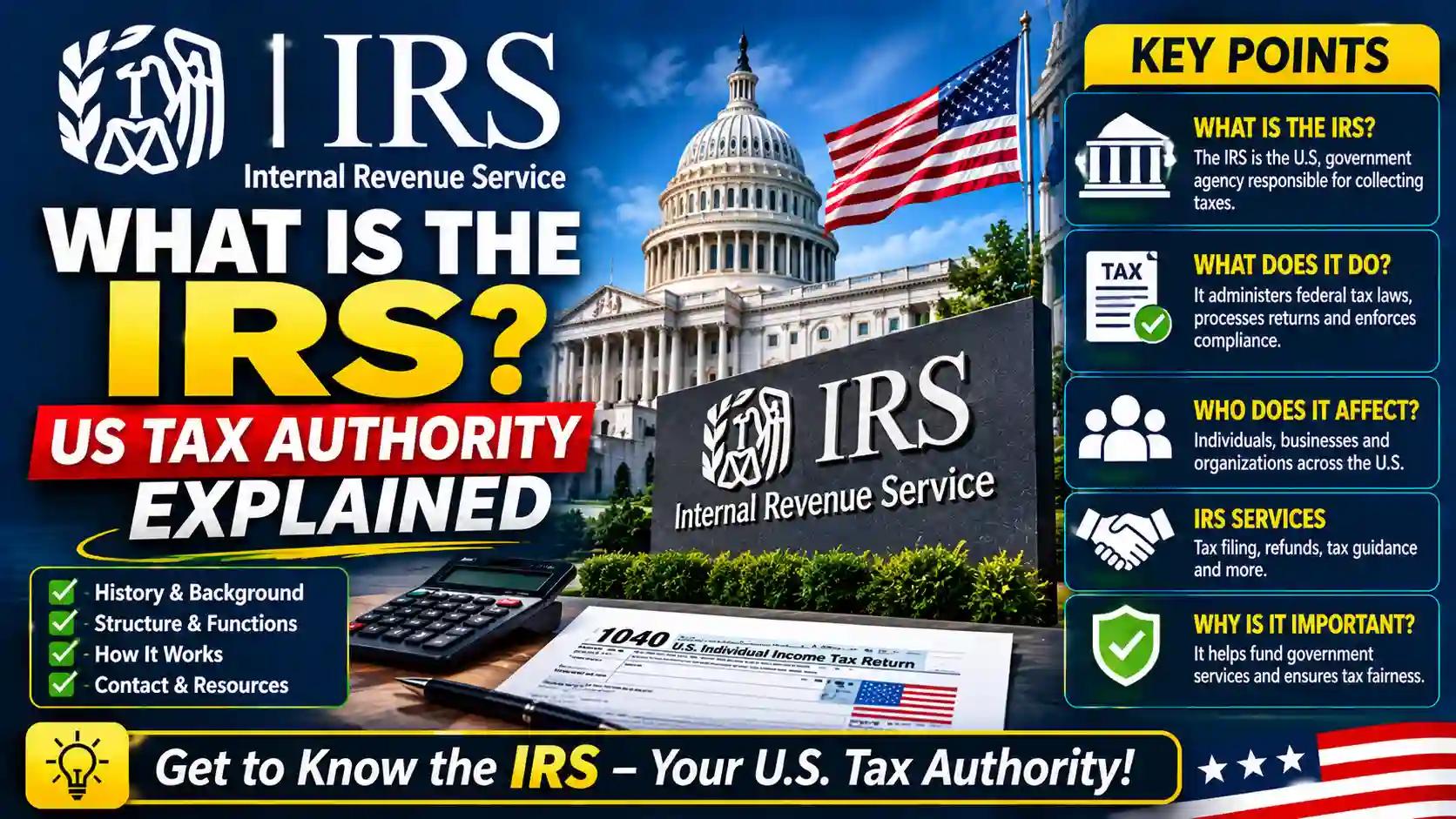
The IRS (Internal Revenue Service) is the United States federal tax authority. It collects federal taxes, processes tax returns, issues refunds, enforces the tax code, and helps taxpayers follow the rules. It is part of the U.S. Department of the Treasury and funds most of the federal government through tax revenue.
If you work online for American clients, sell on Amazon, own a US LLC, or are thinking about a global tax career, you will meet the IRS sooner than you expect. It shows up in forms like the W-8BEN, in emails from clients, and in confusing letters that arrive without warning.
Many people in Pakistan only know the FBR. Then a US client asks for a "W-8BEN" or an "EIN", and panic sets in.
This guide removes that panic. It explains the IRS in plain language, step by step, and covers the Pakistan angle that most guides skip.
What Is the IRS and What Does It Do in Simple Words?
Think of the IRS as the "tax office" of the United States government.
Every country needs money to run roads, schools, hospitals, defense and public services. In the US, a big share of that money comes from federal taxes. The IRS makes sure those taxes are calculated, reported and paid correctly.
The IRS does not write tax laws. Congress writes them. The IRS applies and enforces them.
In simple terms, the IRS does five main jobs:
- Collects taxes from individuals, businesses and employers.
- Processes tax returns such as the Form 1040 and corporate returns.
- Issues refunds when someone has paid more than they owe.
- Checks compliance through notices, audits and investigations.
- Educates taxpayers through forms, guides, online tools and help lines.
According to the IRS's own history pages, the agency collects roughly five trillion dollars in a typical recent year. That is why it is one of the most powerful tax agencies in the world.
You can explore the agency's official site at IRS.gov and read a neutral overview on Wikipedia's Internal Revenue Service page.
What Does IRS Stand For? (IRS Full Form and Meaning)
IRS stands for Internal Revenue Service.
The words are easy to understand once you break them down:
- Internal means money raised from inside the country, such as income and payroll taxes. This is different from customs duties on imports.
- Revenue means government income.
- Service reflects the agency's modern focus on helping taxpayers, not only collecting from them.
So the IRS full form in tax is "Internal Revenue Service," the US tax authority.
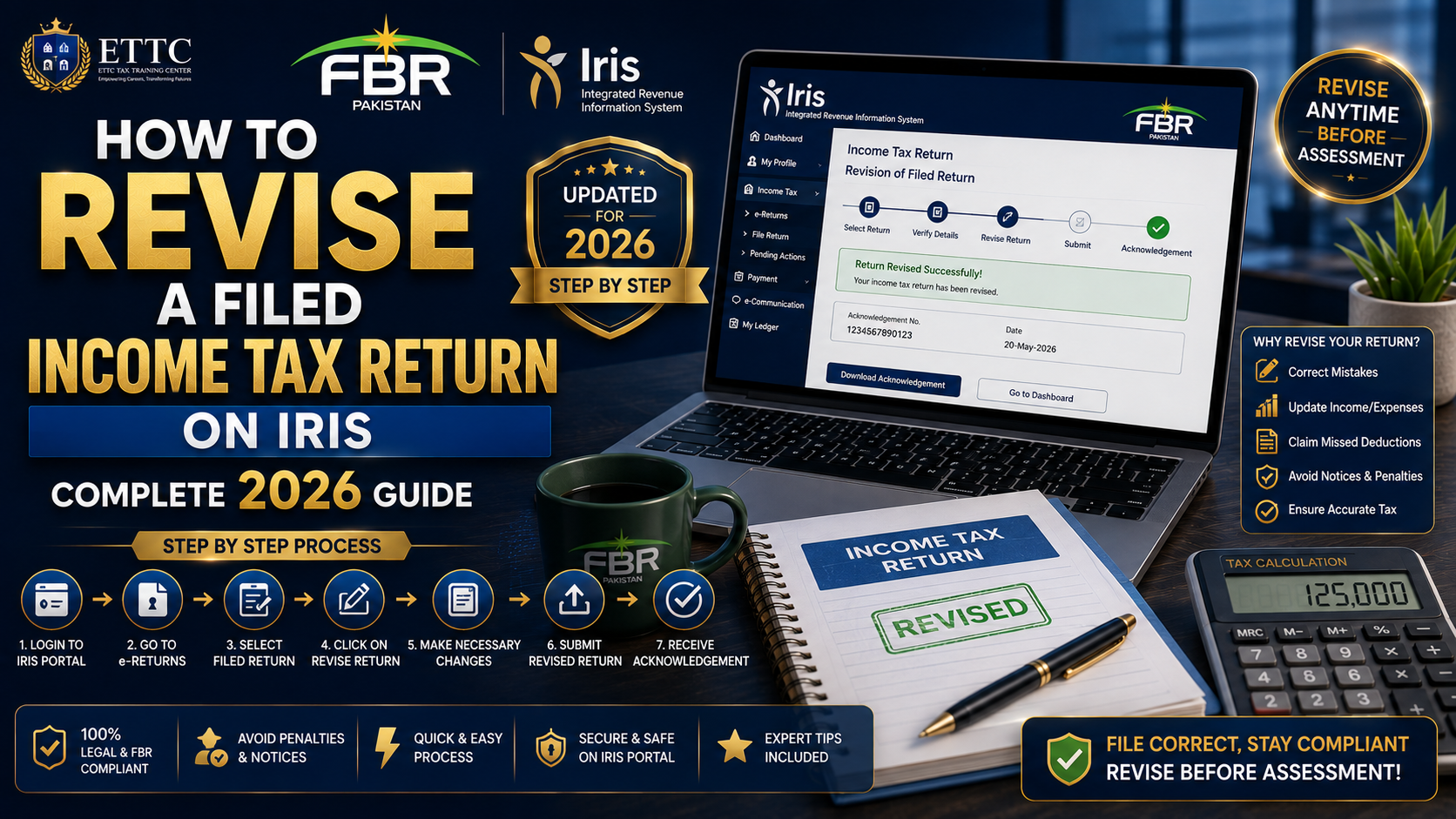
Quick tip for Pakistani readers: In Pakistan, you may also see "IRIS" (with two I's). That is something different. IRIS is the FBR's online tax portal. If you want to learn about it, read what the FBR IRIS portal is. People confuse the two names all the time, but IRS and IRIS are completely separate systems in different countries.
Is the IRS a Government Agency? Is It Part of the Treasury?
Yes. The IRS is a federal government agency. It is a bureau of the U.S. Department of the Treasury.
This matters for two reasons:
- It is federal, not state. The IRS collects federal taxes. Individual states, like California or Texas, have their own state tax agencies for state taxes.
- It is not a separate ministry. The Treasury Department handles the broader financial policy of the US. The IRS is the arm that actually collects the tax.
An easy way to remember it:
Treasury = the big financial department. IRS = its tax collection and enforcement bureau.
Who Runs the IRS?
The IRS is led by a Commissioner. The President of the United States appoints the Commissioner, and the Senate confirms the choice. The Commissioner serves a fixed term of five years.
Because leadership can change, always check the "About IRS" section on IRS.gov for the name of the current head. This is a good habit for any fact that might change over time.
The IRS also has an independent voice inside the agency called the Taxpayer Advocate Service. It helps taxpayers who are stuck in problems the normal system has not solved. If you ever face a serious IRS dispute, it is worth knowing this office exists.
When Was the IRS Established? A Short History
The story of the IRS is more interesting than most people expect.
- 1862: During the American Civil War, President Abraham Lincoln and Congress created the office of Commissioner of Internal Revenue. The goal was to raise money for the war.
- 1913: The 16th Amendment to the US Constitution gave Congress the power to tax incomes. This is the foundation of the modern federal income tax.
- 1953: The agency was renamed the Internal Revenue Service, the name we use today.
- Late 1990s and after: Reforms put more focus on taxpayer rights and customer service.
- Today: E-filing, online accounts and digital payments handle most of the work.
So when someone asks "who created the IRS," the short answer is: the US government created it in 1862, and it has evolved ever since.
How Does the IRS Collect Taxes? (Step by Step)
Understanding how the IRS works is easier when you see it as a simple cycle.
Step 1: Income is earned.
People earn salaries, run businesses, receive interest, sell property or make capital gains.
Step 2: Tax is withheld or estimated.
Employers withhold tax from paychecks. Self-employed people pay estimated tax during the year. This is called tax withholding.
Step 3: Taxpayers file a return.
Most individuals file a Form 1040. Businesses file their own forms. Most people file by April 15.
Step 4: The IRS processes the return.
It checks the numbers, matches them with forms like W-2s and 1099s, and calculates whether you owe more or get a refund.
Step 5: Payment or refund.
If you owe tax, you pay by the deadline. If you overpaid, the IRS sends a refund.
Step 6: Checks and enforcement.
If numbers do not match, the IRS may send a notice, ask for documents, or start an audit.
If you want a Pakistan comparison, this process looks a lot like the FBR cycle explained in how to file an income tax return in Pakistan.
What Types of Taxes Does the IRS Collect?
The IRS handles many kinds of federal tax. Here are the main ones in plain words:
- Federal income tax: Tax on what you earn. The rate depends on your income level and tax bracket.
- Payroll tax: Taxes taken from wages that fund Social Security and Medicare.
- Self-employment tax: What freelancers and business owners in the US pay for Social Security and Medicare, since no employer shares the cost.
- Capital gains tax: Tax on profit from selling assets like stocks or property.
- Corporate tax: Tax on company profits.
- Excise tax: Tax on specific goods or services.
- Estate and gift tax: Tax on large transfers of wealth.
For Pakistani readers, many of these ideas have close cousins in our own system. You can compare them with direct vs indirect tax in Pakistan and capital gains tax in Pakistan.
Key US Tax Terms Everyone Should Know
US tax language can feel like alphabet soup. Here is a simple glossary.
- Tax year: The 12-month period your return covers. For most individuals, it is the calendar year.
- Tax bracket: The rate that applies to each slice of your income. The US uses progressive brackets, so higher income slices are taxed at higher rates.
- Standard deduction: A fixed amount you can subtract from income without listing expenses. The IRS updates it each year, so check the current figure on IRS.gov.
- Tax credit vs tax deduction: A deduction reduces the income that is taxed. A credit reduces the tax itself, which is usually more powerful.
- SSN (Social Security Number): The ID number for US citizens and eligible residents.
- TIN (Taxpayer Identification Number): The general term for any number the IRS uses to identify a taxpayer. SSN, ITIN and EIN are all types of TIN.
- W-2: Shows wages paid by an employer.
- 1099: Shows income paid to non-employees, like contractors.
- Tax lien and tax levy: A lien is a legal claim on your property. A levy is the actual seizure of assets to pay a tax debt.
- Tax evasion vs tax avoidance: Evasion is illegal (hiding income). Avoidance means legally reducing tax through planning.
Knowing these terms helps you read client emails and IRS letters without fear.
Why the IRS Matters to People in Pakistan
You might think, "I live in Pakistan, so why do I care about the IRS?"
Here is why it matters more than ever:
- Thousands of Pakistanis freelance for US clients on Upwork, Fiverr and direct contracts.
- Many run Amazon FBA and other e-commerce stores that sell to US customers.
- Entrepreneurs open Delaware or Wyoming LLCs to do business in the US.
- Professionals work remotely for US companies.
- Many overseas Pakistanis live in the US and file US returns.
In all of these cases, the IRS can ask for forms, numbers or reports. Doing it right protects you from penalties. Doing it wrong can be expensive.
Pakistan also has its own rules for money earned abroad. If you earn from US clients, you should understand both sides. Start with income tax for freelancers in Pakistan and freelancer tax in Pakistan 2026.
IRS vs FBR: What Is the Difference?
This is one of the most searched comparisons from Pakistan, so let us make it simple.
IRS (United States): Federal tax authority of the US. Part of the Treasury Department. Collects federal income tax, payroll tax and more. Uses forms like 1040, W-8BEN and 5472.
FBR (Pakistan): Federal Board of Revenue. Pakistan's national tax authority. Collects income tax, sales tax, customs duties and federal excise. Uses the IRIS portal for filing and the NTN as the main taxpayer number.
A few more differences worth knowing:
- Scope: The FBR also handles customs and sales tax. In the US, customs is handled by a separate agency, and sales tax is mostly collected by states.
- ID numbers: Pakistan uses the NTN and CNIC. The US uses the SSN, ITIN and EIN.
- Tax year: The US usually runs on a calendar tax year for individuals. Pakistan's tax year runs from July to June.
- Online systems: The IRS offers an online account and e-file tools. The FBR uses the IRIS portal. Learn more in FBR IRIS portal in Pakistan.
So is the IRS the same as the FBR? No. They do similar jobs in different countries under different laws. If you want the same comparison for corporate registration, read SECP vs FBR differences.
IRS vs Other Agencies People Confuse It With
IRS vs Treasury Department: The Treasury is the parent department. The IRS is a bureau inside it.
IRS vs state tax agencies: The IRS handles federal tax. State agencies handle state tax. You may owe both.
IRS vs Social Security Administration (SSA): The SSA issues Social Security Numbers and pays retirement and disability benefits. The IRS collects the payroll taxes that fund those benefits. They work together but are separate.
IRS vs HMRC: HMRC is the UK's tax authority. It is the British equivalent of the IRS. If you are curious, ETTC also has a UK tax course.
Do Non-US Citizens Have to Pay IRS Taxes?
Sometimes yes, sometimes no. It depends on where your income comes from and whether you are a US tax resident.
The IRS divides people into two broad groups:
- US persons: Citizens, green card holders and people who meet the "substantial presence" test.
- Nonresident aliens: People who are not US citizens and not US tax residents.
Nonresident aliens are generally taxed only on US-source income, such as income connected to a US business or certain US payments. You can read the official rules on IRS taxation of nonresident aliens.
So the honest answer is: "It depends." That is why understanding the basics is so valuable.
Do Pakistani Freelancers Need to Pay US Tax?
This is the question that brings most Pakistani readers to this topic. Let us answer it carefully.
The general rule: If you are a Pakistani freelancer, you live and work in Pakistan, and you provide services to a US client from Pakistan, your income is usually considered foreign-sourced by US rules. That means it is generally not subject to US income tax, and you usually do not need to file a US tax return just for that income.
Here is what usually happens in practice:
- The US client asks you to fill out a Form W-8BEN.
- This form tells the client you are a foreign person, so they should not withhold US tax.
- You keep it on file and update it when needed.
You can read the official explanation on the IRS Form W-8BEN page.
Important: This is a general rule, not a promise. Your situation may change if you:
- Physically work in the US for a period.
- Have a US business presence.
- Earn US-source income.
- Are a US citizen or green card holder living in Pakistan.
You also still owe tax in Pakistan on what you earn. Do not skip that part. Read freelancer tax in Pakistan for the local rules.
What Is an EIN and How Do You Get One from Pakistan?
An EIN (Employer Identification Number) is a nine-digit number the IRS gives to businesses. Think of it as a business version of a personal ID.
You often need an EIN if you:
- Open a US LLC or corporation.
- Open a US business bank account.
- Hire employees in the US.
- Need to file certain business tax forms.
How to get an EIN from Pakistan (simple steps):
- Prepare your business details (name, type, owner info).
- Fill out Form SS-4.
- Submit it to the IRS by the method allowed for foreign applicants, which usually means phone, fax or mail.
- Receive your EIN confirmation.
For international callers, the IRS provides a dedicated line. Always confirm the current number and process on the official IRS EIN page before you call, because contact methods can change.
Be careful with services that charge high fees for something simple. Getting an EIN from the IRS is free.
What Is an ITIN and Who Needs One?
An ITIN (Individual Taxpayer Identification Number) is a tax ID for people who must file or appear on a US tax return but are not eligible for an SSN.
You may need one if you:
- Must file a US return as a nonresident or resident alien.
- Need to claim a tax treaty benefit.
- Are listed as a spouse or dependent on a US return.
How to apply (simple steps):
- Complete Form W-7.
- Attach your identity documents (a passport is the most common).
- Submit through the IRS, an authorized Acceptance Agent, or a Certifying Acceptance Agent.
- Wait for the IRS to process it and send your number.
An ITIN is only for tax filing. It does not give work authorization or immigration status. See the official page for Individual Taxpayer Identification Numbers.
US LLC Owners in Pakistan: What Does the IRS Expect?
Opening a US LLC (often in Delaware or Wyoming) has become popular among Pakistani entrepreneurs. It can help with payment gateways like Stripe, with banking and with credibility.
But an LLC is not "tax-free" or "paperwork-free."
For a single-member LLC owned by a foreign person, the IRS generally expects:
- An EIN for the LLC.
- Form 5472 (with a pro forma Form 1120) to report certain transactions between the LLC and its foreign owner.
- Correct handling of any US-source or effectively connected income.
The penalty for missing Form 5472 can be very high, so this is not something to ignore. Read the official Form 5472 page to understand the requirement.
Many owners only learn about this after they receive a penalty letter. A short consultation up front is far cheaper than a penalty later.
What About Pakistani Amazon FBA Sellers?
Amazon sellers face a slightly different picture than service freelancers.
If you sell physical goods stored in US warehouses, the IRS may treat that activity as connected to the United States. That can create:
- A requirement to file a US return (often Form 1040-NR or a corporate return).
- A need for an ITIN or EIN.
- State-level sales tax issues in the US.
The exact outcome depends on how your business is structured. Because this area is complicated, many sellers benefit from structured training or advice. ETTC's digital tax and e-commerce course covers this area for online businesses.
What About FATCA and FBAR?
Two names often appear in international tax discussions.
FATCA (Foreign Account Tax Compliance Act): A US law that requires foreign banks to report accounts held by US persons. It mainly affects US citizens and residents with accounts abroad.
FBAR (Foreign Bank Account Report): A report that US persons must file if their foreign accounts pass a certain total value during the year.
If you are a Pakistani who is not a US person, these usually do not apply to you directly. But if you are a US citizen or green card holder living in Pakistan, they very much do. For help in that situation, see the guide on filing a US expat tax return from Pakistan.
Is There a Tax Treaty Between Pakistan and the USA?
A tax treaty is an agreement between two countries to avoid double taxation. It can lower or remove tax on certain kinds of income.
The US keeps a list of its treaties and their scope. Pakistan's arrangement with the US is not as broad as the treaties many other countries have, so you should not assume you can claim treaty benefits. Always check the current treaty tables on IRS.gov and speak to a qualified professional before claiming anything on a form.
IRS Deadlines: When Do Taxes Have to Be Filed?
For most individuals, the main US tax deadline is April 15. If April 15 falls on a weekend or holiday, it moves to the next business day.
Some other timing points:
- Many nonresident aliens have a later deadline if they did not receive wages subject to withholding.
- Businesses have their own deadlines depending on the entity type.
- Extensions are available, but an extension to file is not an extension to pay.
What happens if you miss the deadline?
The IRS can charge penalties and interest. The earlier you act, the smaller the damage. Even if you cannot pay in full, filing on time or requesting an extension is usually better than doing nothing.
The IRS also offers payment plans for people who owe tax. If you are in this situation, look at the official payment options on IRS.gov.
How Long Does the IRS Take to Process a Refund?
For most e-filed returns without errors, the IRS says refunds are typically issued in about 21 days. Paper returns and returns with mistakes can take much longer.
You can check your status with the official Where's My Refund? tool on the IRS refunds page.
Tips to avoid delays:
- File electronically.
- Choose direct deposit.
- Double-check names, numbers and bank details.
- Respond quickly to any IRS letter.
Can the IRS Audit Foreigners?
Yes. The IRS can examine returns and forms filed by nonresident individuals and foreign-owned businesses, just as it can for US residents.
An audit does not always mean you did something wrong. It often means the IRS wants more proof for something on your return.
Common reasons that may attract attention:
- Numbers that do not match the forms the IRS received.
- Missing required forms.
- Large or unusual deductions.
- Unreported income.
If you ever receive an audit letter, do not ignore it. Read it carefully, note the response date and gather your documents. If you want to understand how audit processes work in general, see the FBR tax audit process in Pakistan and how to respond to an FBR audit notice. The principles of keeping records and responding on time are similar.
How to Avoid IRS Scams
Scammers love pretending to be the IRS. Pakistani freelancers and small businesses are also targeted.
Here are the warning signs:
- A call or message demanding immediate payment by gift card, crypto or wire.
- Threats of arrest.
- Emails with strange links asking for your personal details.
- Messages from a free email address pretending to be an official IRS email.
Remember these facts:
- The IRS usually starts contact by mail, not by threatening phone calls.
- It does not demand payment in gift cards.
- It does not threaten immediate arrest over the phone.
If you are unsure, do not click anything. Check the official guidance on IRS tax scams and consumer alerts. Then contact the IRS using numbers from the official website, not from the suspicious message.
How to Contact the IRS from Pakistan
Contacting the IRS from outside the US can be tricky, so plan ahead.
- Use the international contact information listed on IRS.gov. Phone numbers and hours change, so always check the official page first.
- Keep your documents ready (ID, form numbers, letter reference).
- Remember the time difference. US business hours are late evening or night in Pakistan.
- For complex cases, consider a qualified professional who can communicate on your behalf.
Note that the IRS has no regular walk-in office in Pakistan. Be careful of anyone claiming to be an "IRS Pakistan office." Anything claiming to be official should match the information on IRS.gov.
Useful IRS Online Tools Beginners Should Know
The IRS has improved its digital services. These tools help most people:
- IRS Online Account: View balances, payments and records.
- IRS e-file: File returns electronically.
- IRS Direct Pay: Pay directly from a bank account.
- IRS Free File: Free filing for people under certain income levels.
- Where's My Refund?: Track your refund status.
- Tax transcripts: Official summaries of your tax records.
Many of these require identity verification, and some are designed for US taxpayers. Check whether they apply to your situation before you start.
Why Learn US Taxation? Career and Business Scope
Here is the opportunity side of this story.
Pakistan has a growing number of freelancers, exporters and small businesses working with the US market. Most of them do not understand US tax basics. That gap creates real demand for professionals who do.
People with US tax knowledge can work as:
- US tax preparers and reviewers.
- Compliance specialists for outsourcing firms.
- Advisors to freelancers and LLC owners.
- Consultants for cross-border businesses.
- Accountants supporting US clients remotely.
Many Pakistani professionals even build careers with firms abroad. You can explore the possibilities in tax consultant jobs abroad for Pakistanis, the international taxation career roadmap, and the USA taxation course scope and salary guide. For local earning ideas, see tax consultant salary in Pakistan.
If you are a CA or ACCA student, this skill can set you apart. See taxation courses for CA and ACCA students.
How to Learn IRS and US Tax Rules (Free and Paid)
You can learn in several ways.
Free resources:
- Official guides and instructions on IRS.gov.
- The Taxpayer Advocate Service's educational material.
- ETTC's free blog articles and tax calculators.
Paid and structured learning:
- A guided course with real examples, form practice and expert feedback.
- Instructor-led training that explains how rules apply to Pakistani professionals.
Free resources are great for basics. But US tax has many "it depends" situations. A structured course with an experienced mentor helps you avoid costly guesswork.
Why Choose ETTC for US Tax Training?
If you want to go beyond reading and build a real skill, Elite Tax Training Center (ETTC) is built for Pakistani learners.
Here is why many students choose ETTC:
- Practical focus: Lessons use real forms, scenarios and case studies.
- Local context: You learn how US rules connect with Pakistani realities.
- Experienced mentors: Learn from professionals listed on the mentors page.
- Multiple city options: Classes and programs are available for learners in Islamabad, Karachi and Lahore.
- Wide course range: From the USA tax course to international tax planning, UAE tax, UK tax and FBR income tax.
Want to compare options first? Read why ETTC is considered the best tax institute in Islamabad and online vs physical tax courses in Pakistan.
Real-World Examples
Example 1: The freelance designer.
Ayesha is a graphic designer in Lahore who works for a US startup. She completes a W-8BEN, keeps her invoices, and pays tax in Pakistan under local rules. She has no US filing duty on that income because she works from Pakistan.
Example 2: The Wyoming LLC owner.
Bilal in Karachi opens a Wyoming LLC for a dropshipping store. He gets an EIN and learns he must file Form 5472 every year, even with low sales. He sets a reminder and avoids a heavy penalty.
Example 3: The accounting graduate.
Hamza from Islamabad completes US tax training, starts reviewing returns for an outsourcing firm, and later serves freelancers locally. He turned a confusing topic into a career.
These examples are for illustration only. Your facts may lead to a different answer.
Frequently Asked Questions About the IRS
What is the IRS in simple terms?
The IRS is the US federal agency that collects taxes, processes tax returns and enforces federal tax law. It is part of the Treasury Department.
What does IRS stand for?
IRS stands for Internal Revenue Service.
What is the main job of the IRS?
Its main job is to collect federal taxes and help people follow the tax rules, so the government can fund public services.
Is the IRS a federal or state agency?
It is a federal agency. States have their own tax agencies.
Who is the head of the IRS?
The IRS Commissioner leads it. The President appoints the Commissioner and the Senate confirms the appointment. Check IRS.gov for the current officeholder.
How does the IRS collect taxes?
Through payroll withholding, estimated payments, filed tax returns and direct payments, followed by notices and enforcement if needed.
What is the difference between the IRS and the Treasury Department?
The Treasury Department manages national financial policy. The IRS is a bureau inside it that handles tax collection.
Do Pakistani freelancers need to file US taxes?
Usually not, if they live and work in Pakistan and provide services from Pakistan. They typically give clients a W-8BEN. Special situations can change this, so confirm your case. Also remember Pakistani tax rules still apply.
What is an ITIN and who needs one?
An ITIN is a tax ID for people who need to file US taxes but cannot get an SSN. You apply using Form W-7.
What is an EIN and how do I get one?
An EIN is a business tax ID from the IRS. Foreign applicants usually apply through Form SS-4 by phone, fax or mail. It is free.
What happens if I miss the IRS deadline?
You may face penalties and interest. Filing late is usually better than not filing, and extensions can help, though they do not extend the time to pay.
How can I know if an IRS call or email is real?
The IRS normally contacts people by mail first. Be suspicious of threats, gift card demands or odd links. Verify using official IRS scam alerts.
Is the IRS the same as the FBR in Pakistan?
No. The IRS is the US tax authority. The FBR is Pakistan's. They serve similar purposes under different laws.
Conclusion: Your Next Step
The IRS may look intimidating, but it follows a clear logic. It is the US tax authority that collects federal taxes, runs on forms and deadlines, and now touches many Pakistani freelancers, sellers and entrepreneurs.
The key points to remember:
- IRS means Internal Revenue Service.
- It is a federal agency under the US Treasury.
- Pakistani freelancers working from Pakistan usually give clients a W-8BEN, but special cases exist.
- US LLC owners often need an EIN and Form 5472.
- Always verify scams and contact details on official sites.
- Pakistan's tax rules still apply to your income.
Knowledge protects you from penalties, and it can also become a career. If you want to turn this into a professional skill, explore the USA tax course at ETTC, browse all ETTC courses, or contact the ETTC team with your questions.
Ready to master US taxation? Book a seat in the Advanced Taxation Course at ETTC, the Best Tax Training Institute in Pakistan, and start building a skill that works across borders.
Written by
ETTC Team
Expert instructor at ETTC – Elite Tax Training Centre, helping professionals master practical taxation for global careers.