 UK Tax
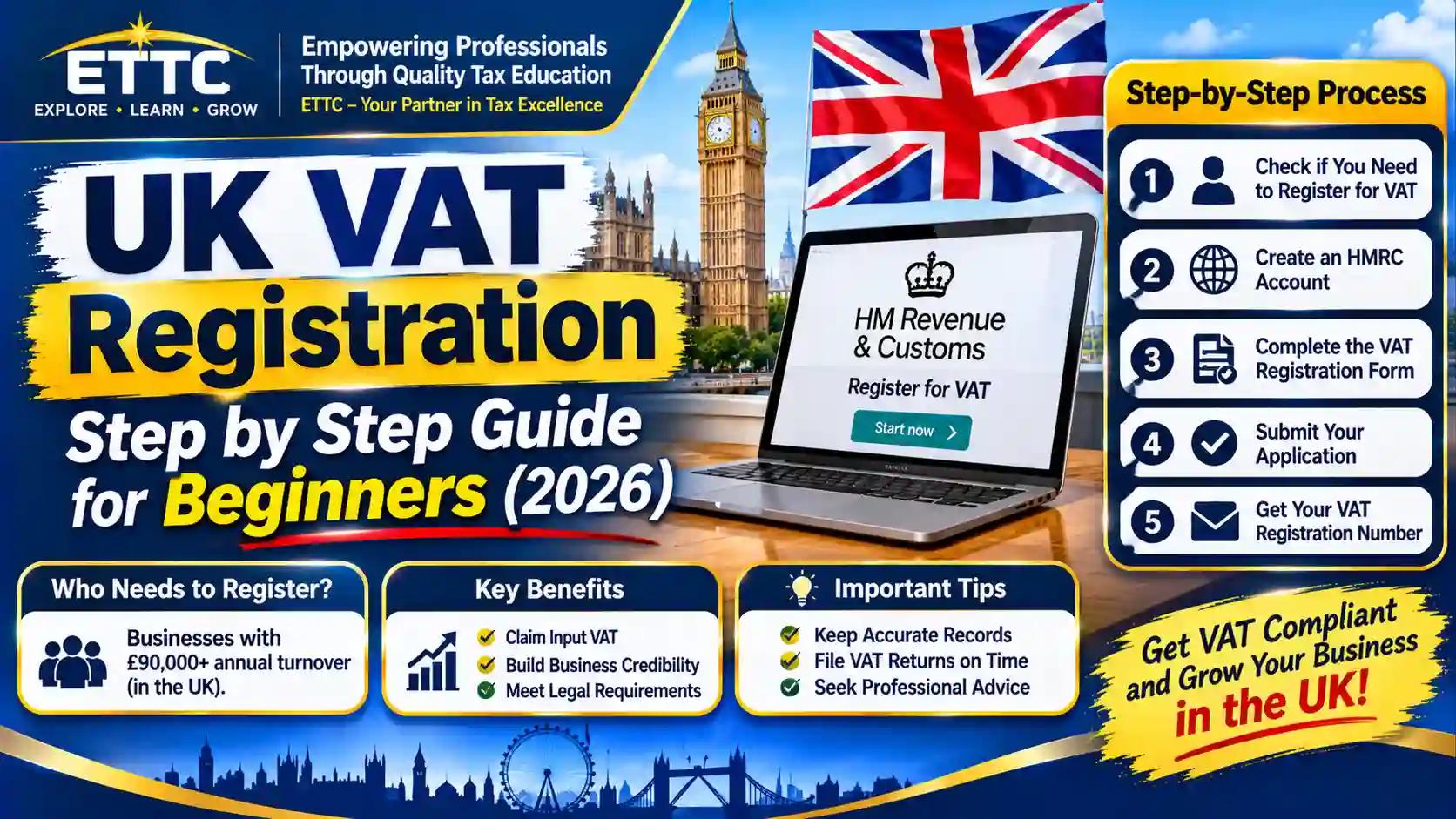
To complete UK VAT registration, check whether your taxable turnover is above £90,000 (or you want to register voluntarily). Create a Government Gateway account, then apply online on GOV.UK with your business details, bank details and turnover figures. HMRC then issues your VAT number and certificate, usually within about 30 working days.
If you're staring at the words "VAT registration" and feeling a bit lost, you're in good company. Almost every new business owner hits this wall. The rules look confusing, the HMRC website feels heavy, and one wrong move can mean penalties.
This guide takes the fear out of it. I'll walk you through who needs to register, what you need before you start, and how to complete each step of the process. I'll also cover what happens afterwards, because registration is only the start.
I've also added a section for Pakistani freelancers, ecommerce sellers and Amazon FBA sellers who sell into the UK. If you're building a tax career, there's a learning roadmap near the end too.
Quick note: Tax rules change. I've written this with November 2026 figures in mind, but always confirm thresholds on GOV.UK's official VAT registration page before you file anything.
What Is VAT and How Does It Work in the UK?
VAT stands for Value Added Tax. It is a tax on most goods and services sold in the UK. HMRC (His Majesty's Revenue and Customs) is the UK tax authority that collects it.
Here's the simple version of how it works:
- You sell something and add VAT to the price. This is called output tax.
- You buy things for your business and pay VAT on them. This is called input tax.
- Every VAT period, you subtract input tax from output tax and pay HMRC the difference.
If your input tax is higher than your output tax, HMRC refunds you the difference.
Example: You sell a design service for £1,000 plus 20% VAT. The customer pays you £1,200. You bought software for £200 plus £40 VAT. You owe HMRC £200 minus £40, which is £160. The remaining £40 is yours to reclaim.
So VAT isn't really a cost to your business. You collect it on behalf of HMRC. The customer carries the burden.
The Three Main UK VAT Rates
- Standard rate (20%): most goods and services
- Reduced rate (5%): things like home energy and children's car seats
- Zero rate (0%): things like most food, books and children's clothes
Zero-rated is not the same as exempt. With zero-rated sales you still register and file returns, but you charge 0%. With exempt supplies (like some insurance or education), you generally can't register or reclaim input VAT. You can check the current list on the official UK VAT rates page.
Why VAT Registration Matters (Especially for Beginners)
Getting VAT registration wrong is expensive. Register too late and you may owe VAT you never collected from customers. That comes straight out of your pocket, plus possible penalties.
Registration also brings benefits:
- You can reclaim input VAT on business purchases
- You look more credible to larger business clients, who usually expect a VAT number on invoices
- You build good habits early, with proper bookkeeping and digital records
On the other hand, registering when you don't need to means extra admin and, in many cases, higher prices for customers who can't reclaim VAT. We'll look at that trade-off shortly.
Who Must Register for VAT in the UK? (Compulsory Registration)
You must register for VAT if your VAT taxable turnover goes over the registration threshold. That is currently £90,000, and it has been frozen for several years. Check the current threshold on GOV.UK before you rely on this number.
Two details trip up beginners every year.
Rule 1: The Rolling 12-Month Test
The threshold is not tied to the tax year or calendar year. You look at the last 12 months at the end of every month.
Example: At the end of October, you add up your taxable sales from November last year to October this year. If that total is over £90,000, you must register.
Many people only check their numbers at year end. That's too late.
Rule 2: The 30-Day Forward Look
You must also register if you expect your turnover to go over £90,000 within the next 30 days alone.
Example: You win a big contract worth £100,000 starting next week. You don't wait for the year to finish. You register straight away.
What Counts as Taxable Turnover?
Taxable turnover is the total of everything you sell that is not exempt from VAT. That includes standard-rated, reduced-rate and zero-rated sales. It's not your profit. It's your sales.
Deadlines After Crossing the Threshold
If you go over under the rolling 12-month test, you must apply within 30 days of the end of the month you went over. HMRC will normally set your registration date as the first day of the second month after you went over.
Miss the deadline and HMRC can charge a late registration penalty. The penalty depends on how late you are and how much VAT you owe.
Voluntary VAT Registration: Should You Register Early?
You can register for VAT even if your sales are below £90,000. That's called voluntary VAT registration.
When Voluntary Registration Makes Sense
- Your customers are VAT-registered businesses. They can reclaim the VAT you charge, so it doesn't cost them extra.
- You have large start-up costs. Buying equipment or stock? You can reclaim the VAT on those purchases.
- You sell zero-rated goods. You charge 0% but still reclaim VAT on your costs, which often leaves you with a regular refund.
- You want to look established. A VAT number on your invoice builds trust with bigger clients.
When It Might Not Make Sense
- Most of your customers are ordinary consumers who can't reclaim VAT. Your prices effectively rise by 20%, or your margin drops.
- You sell mainly exempt services.
- You don't want the extra admin of quarterly digital returns.
Ask yourself one question: "Who are my customers, and can they reclaim VAT?" The answer settles most voluntary registration debates.
What You Need Before You Start: VAT Registration Documents Checklist
Gather these first. It saves a lot of frustration mid-application.
- Business name and address
- Business structure details: sole trader, partnership, limited company
- National Insurance number (for sole traders)
- UTR (Unique Taxpayer Reference), if you have one
- Companies House registration number and incorporation date (for limited companies)
- Business bank account details: account number and sort code, or overseas bank details
- A description of your business activity, so HMRC can assign the right SIC code
- Your taxable turnover figures: what you've sold in the last 12 months and what you expect to sell
- Date you want to register from, or the date you crossed the threshold
- Your business email and phone number
For partnerships, you'll also need details for each partner. Partnerships traditionally use the VAT2 form, though most applications now go through the online service.
Most businesses can register for VAT online through GOV.UK. A small number still need the VAT1 paper form, such as certain agents or some special cases.
UK VAT Registration Step by Step (The Online Process)
Here's the process from start to finish.
Step 1: Confirm You Actually Need to Register
Before you start, run your numbers. Check the rolling 12-month figure and your 30-day forecast. If you're below the threshold and thinking about registering voluntarily, think through the customer question above.
Step 2: Create a Government Gateway Account
The Government Gateway is your login for HMRC's online services. If you don't have one, you'll create a user ID and password and set up two-step verification.
If you're a limited company, you create a Gateway account for the business, not for yourself personally. Keep these login details safe. You'll use them for years.
Step 3: Start the VAT Registration Application
Go to the GOV.UK register for VAT page and select the option to register. Sign in with your Government Gateway ID.
Step 4: Enter Your Business Details
You'll be asked for your business name, structure, address, activity and contact details. Take your time here. Mistakes cause delays, and HMRC may reject mismatched information.
Step 5: Enter Your Turnover and Dates
You'll tell HMRC your taxable turnover and your effective date of registration. This is the date your VAT obligations begin. If you registered late, you may need to explain why.
Step 6: Add Your Bank Details
HMRC asks for bank details so it can send VAT refunds and set up direct debits. The account should be in the business's name where possible.
Step 7: Review and Submit
Check every field, then submit. You'll get a confirmation and a reference number. Save it.
Step 8: Wait for Your VAT Number and Certificate
HMRC will send your VAT registration certificate. It includes your VAT number, your effective date and your first return period. Online applications often come through faster than paper, but HMRC says it can take up to 30 working days. Don't assume it will be quicker.
How Long Does VAT Registration Take, and What Does It Cost?
Timeline: Plan for up to about 30 working days. Some come through in a couple of weeks. Complex cases can take longer.
Cost: Registering for VAT with HMRC is free. You only pay if you hire an accountant or agent to do it for you, and fees vary widely.
The real costs are indirect:
- Accounting software that supports Making Tax Digital
- Time spent on bookkeeping and returns
- Possible accountant fees for quarterly filing
Can You Charge VAT Before You Get Your VAT Number?
No. You cannot show VAT on invoices until you have a VAT number. But your effective date may be earlier than the day your number arrives.
If your registration is backdated, you're responsible for VAT from the effective date. That means you may have to pay HMRC VAT on sales you didn't charge it on. Many businesses end up absorbing it. This is why registering on time matters so much.
Once you have your number, you should:
- Add it to all invoices
- Issue proper VAT invoices
- Tell your customers about the change in your pricing
VAT Registration for Different Business Types
VAT Registration for Sole Traders
Sole traders register in their own name, using their National Insurance number and UTR. Your VAT registration is separate from your Self Assessment tax return, but your turnover counts across all your trading activities.
Tip: If you run two separate sole trader businesses, HMRC can add the turnover together. Don't split your income to dodge the threshold. HMRC can deem that "artificial separation."
VAT Registration for a Limited Company
A limited company is a separate legal entity, so the company registers, not the director. You'll need the Companies House number and the company's UTR for Corporation Tax. Your VAT and Corporation Tax are different taxes with different deadlines.
VAT Registration for Freelancers and Contractors
Freelancers follow the same threshold rules as everyone else. If you work for a few agencies or clients who are VAT-registered, voluntary registration is worth considering. Many freelancers choose the Flat Rate Scheme to keep things simple (more on that below).
VAT Registration for Partnerships
The partnership registers as one business. Details of all partners are required.
VAT Registration for Non-UK Residents and Overseas Sellers
This section matters if you're based in Pakistan, the UAE or anywhere outside the UK, but sell to UK customers.
The Big Difference: Overseas Businesses Often Have No Threshold
If you're a non-established taxable person (NETP) making taxable supplies in the UK, there's generally no registration threshold. You may need to register from your very first sale. The details depend on what you sell and where the goods are when sold. Check HMRC's guidance on GOV.UK for your exact situation.
Common Scenarios for Pakistani Sellers
- You store goods in the UK (for example, Amazon FBA warehouses). Selling from UK stock means UK VAT generally applies, and you typically need to register.
- You ship low-value goods directly to UK customers. For consignments up to £135, UK VAT rules require the seller to charge VAT at the point of sale and register with HMRC.
- You sell digital services to UK consumers. Place of supply rules can create a UK VAT liability.
- You sell services to UK businesses. The customer may account for VAT under the reverse charge, so you might not need to register. It depends on the service.
Practical advice: If you're a Pakistani freelancer or ecommerce seller targeting the UK, get your VAT position reviewed before you launch, not after. Fixing a backdated registration costs far more than doing it right the first time.
If you want to understand how digital and cross-border tax works from a Pakistani perspective, our guide on digital economy and ecommerce tax in Pakistan is a useful companion read. Freelancers should also look at our freelancer tax guide for Pakistan to see how your home-country obligations sit alongside UK VAT.
What About EORI?
If you import or export goods between Great Britain and other countries, you'll likely need an EORI number. It's separate from your VAT number. You can apply for an EORI on GOV.UK.
Import VAT and Postponed VAT Accounting
If you're VAT-registered and import goods, you can use postponed VAT accounting. Instead of paying import VAT at the border, you account for it on your VAT return. That helps your cash flow a lot.
What Happens After You Register? (Your First 90 Days)
Many guides stop at the certificate. That's a mistake. Here's what comes next.
1. Check Your VAT Certificate
Confirm the details are right, especially your effective date and VAT return periods.
2. Sign Up for Making Tax Digital for VAT
Making Tax Digital (MTD) means you keep digital records and submit returns using MTD-compatible software. This is required for VAT-registered businesses. Popular options include Xero, QuickBooks and FreeAgent. Read the GOV.UK guide on VAT record keeping to understand what you must store.
3. Update Your Invoices
A valid VAT invoice must show:
- Your business name, address and VAT number
- The invoice date and a unique invoice number
- A description of the goods or services
- The amount before VAT, the VAT rate and the VAT amount
- The total payable
4. Pick Your VAT Accounting Scheme
You have several options. The right one saves money or admin time.
Standard accounting: You account for VAT based on invoice dates, even if the customer hasn't paid you yet.
VAT Flat Rate Scheme: You pay a fixed percentage of your gross turnover. It simplifies record keeping. You can generally join if you expect taxable turnover of £150,000 or less (excluding VAT). Read the Flat Rate Scheme rules on GOV.UK. Watch out for the limited cost trader rate, which is higher at 16.5%.
VAT Cash Accounting Scheme: You pay VAT only when your customers pay you. This is great if you often wait for late payments. See the official cash accounting guidance.
VAT Annual Accounting Scheme: You make advance payments through the year and file one annual return. It reduces paperwork. Read the annual accounting scheme page.
Which one is best for a beginner? There's no single winner. Cash accounting suits businesses with slow-paying customers. The Flat Rate Scheme suits low-cost service providers. Standard accounting suits businesses with lots of purchases to reclaim. Talk to a qualified adviser if you're unsure.
5. Submit Your First VAT Return
Most businesses file quarterly. Each return covers a three-month VAT period. You normally have one month and seven days after the period ends to file and pay.
Your return shows:
- VAT due on sales
- VAT reclaimed on purchases
- Net VAT you owe or are owed
You can read the official VAT returns guide here. Never leave your first return to the last day. If something breaks, you'll need time to fix it.
Common VAT Registration Mistakes Beginners Make
I've seen the same mistakes over and over. Avoid these and you're ahead of most new registrants.
- Checking turnover only once a year. The test is rolling and monthly.
- Forgetting the 30-day forward look. A single large contract can trigger registration instantly.
- Mixing up zero-rated and exempt. They are treated very differently.
- Charging VAT without a VAT number. This is not allowed.
- Using spreadsheets that don't meet MTD rules. You need compatible software or a bridging tool.
- Ignoring import VAT. If you buy from overseas, this affects your cash flow.
- Not keeping records for the required period. HMRC can ask for them during an audit.
- Registering late and hoping nobody notices. HMRC uses data matching. They often do notice.
What Happens If You Register Late?
If you register late, HMRC can require you to pay VAT back to your effective date. You may also face a penalty based on how late you are and the amount of VAT involved.
The best way to reduce penalties is to act as soon as you realise. Telling HMRC voluntarily is usually treated better than being caught. If you're in this position, speak to a tax adviser before you submit anything.
Can You Deregister From VAT?
Yes. You can deregister if your taxable turnover falls below the deregistration threshold, currently £88,000, or if you stop trading. You can find the steps to cancel your VAT registration on GOV.UK.
Remember, deregistering has consequences. You may have to account for VAT on assets you still hold, such as stock and equipment. Plan this carefully.
UK VAT vs Pakistan Sales Tax: What's the Difference?
If you're from Pakistan, you probably know sales tax well. UK VAT works on a similar principle, but there are differences.
- Who collects: HMRC in the UK. FBR (or provincial authorities for some services) in Pakistan.
- Registration: UK uses a turnover threshold. Pakistan's rules depend on your business type and activity. See our FBR sales tax registration guide.
- Filing: UK uses MTD software. Pakistan uses the IRIS portal and related systems.
- Returns: UK VAT is usually quarterly. Pakistan sales tax returns are typically monthly. See our guide on how to file a monthly sales tax return in Pakistan.
Once you understand one system deeply, the other becomes easier. That's one reason international tax skills are in demand.
You can also test your Pakistan numbers with our free sales tax calculator.
Is It Worth Learning UK Tax? Career Scope for Pakistanis
Here's the part many tax guides skip. UK VAT and wider UK tax knowledge can open real doors.
Why UK Tax Skills Are in Demand
- UK businesses constantly need VAT, payroll and corporation tax support
- Remote bookkeeping and tax work is increasingly accepted
- Pakistani professionals can serve UK clients from home
- Combining UK tax knowledge with ACCA, ATT, CTA or AAT qualifications boosts your profile
Job and Income Scope
Roles where UK tax knowledge helps include:
- UK VAT and tax associate
- Bookkeeper with VAT returns
- Remote accountant for UK SMEs
- Ecommerce compliance specialist
- Tax consultant for cross-border businesses
Earnings vary a lot by experience, employer and client base. Don't trust anyone who promises a fixed salary. Instead, look at the skills gap: people who understand both Pakistani and UK systems are rarer, so they're often paid more.
To see how this plays out in practice, read our guides on tax consultant jobs abroad for Pakistanis and the international taxation career roadmap for Pakistan.
If you're studying for professional exams, our article on a taxation course for CA and ACCA students shows how practical training complements your qualification.
Professional Bodies Worth Knowing
- ACCA, which offers the UK Taxation paper (TX-UK)
- AAT, with accounting and tax qualifications
- CIOT (Chartered Institute of Taxation), the UK's leading professional body for tax advisers
How to Learn UK VAT and UK Tax: Free and Paid Options
Free Ways to Start
- Read GOV.UK VAT guidance, starting with the VAT overview
- Watch HMRC webinars and YouTube explainers
- Practise with free trial versions of Xero, QuickBooks or FreeAgent
- Follow tax professionals and bodies like CIOT and ACCA
Paid Learning
Free resources teach you the rules. They rarely teach you how to apply them to messy real businesses. Structured training gives you:
- Guided practice on real scenarios
- Feedback from experienced mentors
- A recognised certificate
- A clear path to client work or a job
Why Choose ETTC for UK Tax Training in Pakistan?
If you want to turn this knowledge into a career, why choose ETTC is a fair question, so here is a direct answer.
Elite Tax Training Center (ETTC) is a Pakistan-based tax training institute focused on practical, job-ready skills rather than theory alone. Here's what learners usually look for, and what ETTC offers:
- Practical focus: Training built around real filing, compliance and advisory work
- Experienced mentors: Meet the ETTC mentors who teach the programmes
- Wide course range: From Pakistan taxes to UK, USA, UAE and Saudi tax
- City access: Programmes available for Islamabad, Karachi and Lahore learners
- Career support mindset: Content designed around what employers and clients actually need
Explore the UK Tax Courses
Ready to go deeper than a blog article? Start with the main UK tax course at ETTC. It covers the foundations you need for VAT, income tax and business compliance.
Prefer a city-specific page? Choose yours:
Learners outside these cities, including Multan, Faisalabad, Peshawar, Sialkot and Quetta, can also explore options by contacting the ETTC team.
Related Programmes That Pair Well With UK VAT
- Explore Advanced taxation courses at Elite Tax Training Center (ETTC)
- International tax planning
- Tax accounting and reporting
- Digital tax and ecommerce
- UAE tax course (useful if you also work with Gulf VAT)
- USA tax course
If you're curious about the UAE side of VAT, see our UAE VAT registration guide for business owners.
Real-World Examples: How UK VAT Registration Plays Out
Example 1: The Freelance Designer in Manchester
Ayesha is a freelance designer. Over 12 months, her sales reach £92,000. She checked only at year end and was already 3 months over the threshold. She registered late, paid VAT on those months out of her own pocket and learned the hard way to run monthly checks.
Lesson: Track your rolling 12-month turnover every month.
Example 2: The Pakistani Amazon FBA Seller
Bilal lives in Lahore and sells home products through Amazon UK, storing stock in UK warehouses. Because the goods are in the UK when sold, UK VAT applies. He registers as an overseas business, gets an EORI number, uses postponed VAT accounting for imports and files digital returns through MTD software.
Lesson: Overseas sellers often have no threshold. Plan your VAT before launch.
Example 3: The Consultant Who Registered Voluntarily
Sara runs a small consultancy with £60,000 in sales, mostly to VAT-registered companies. She buys £15,000 of equipment. By registering voluntarily, she reclaims input VAT, and her clients don't mind the extra 20% because they reclaim it.
Lesson: If your customers are VAT-registered, voluntary registration can be a smart move.
(These are illustrative examples, not real individuals.)
Future Career Opportunities With UK and International Tax Skills
The demand for cross-border tax knowledge keeps growing. Why?
- More Pakistani freelancers and sellers target UK and Gulf customers
- Tax authorities worldwide are going digital
- Businesses want advisers who understand more than one system
- Remote work makes serving international clients realistic
You can grow into roles such as international tax consultant, VAT specialist, ecommerce tax adviser, or even start your own consultancy. Our guide on how to start a tax consultancy firm in Pakistan shows one route. If you're earlier in your journey, read how to become a tax consultant in Pakistan.
Frequently Asked Questions About UK VAT Registration
What is VAT registration in the UK?
VAT registration is the process of telling HMRC your business will charge, collect and report VAT. After you register, you receive a VAT number and certificate and must file regular VAT returns.
Who needs to register for VAT in the UK?
Any business whose taxable turnover goes above £90,000 in a rolling 12-month period, or which expects to exceed it in the next 30 days, must register. Many overseas sellers must register from their first UK taxable sale.
What is the current VAT registration threshold?
The UK VAT registration threshold is £90,000, and the deregistration threshold is £88,000. Always confirm on GOV.UK before you act.
Can I register for VAT without a limited company?
Yes. Sole traders and partnerships can register for VAT. You don't need a company.
How long does VAT registration take?
HMRC says it can take up to 30 working days, although some applications finish sooner. Complex cases may take longer.
How much does it cost to register for VAT?
Registering with HMRC is free. You only pay if you hire an accountant or agent.
What do I need to register for VAT?
You need your business details, bank details, turnover figures, a Government Gateway account and your UTR or Companies House number, depending on your business type.
Can I register for VAT myself without an accountant?
Yes. Most businesses can register online on GOV.UK without help. An accountant is helpful for complex cases, but not required.
Do I charge VAT before I receive my VAT number?
No. You can't show VAT on invoices until you have a VAT number. But you may owe VAT from your effective date, so register on time.
Can foreign businesses register for UK VAT?
Yes. Overseas businesses making taxable supplies in the UK can register, and often must, with no minimum threshold.
Do I need VAT registration if I sell on Amazon or eBay?
It depends on where your goods are and who you sell to. UK-stored goods and many cross-border sales trigger UK VAT. Check your specific model with HMRC guidance.
What is the difference between voluntary and compulsory VAT registration?
Compulsory registration is required by law once you pass the threshold. Voluntary registration is your choice when you're below the threshold.
What does a VAT number look like?
A UK VAT number starts with "GB" followed by nine digits, for example GB123456789. You can check a UK VAT number on GOV.UK.
Can I reclaim VAT before registering?
In some cases, yes. You may reclaim VAT on certain goods bought up to four years before registration and on services bought up to six months before, if you still use them in the business. Check the rules carefully.
What happens if I register late for VAT?
You may owe VAT back to your effective date and could face a penalty. Acting quickly helps reduce the impact.
How often do I file VAT returns?
Most businesses file every quarter. Some use monthly or annual schemes.
What is Making Tax Digital for VAT?
It's HMRC's system requiring digital VAT records and returns submitted through compatible software.
Which VAT scheme is best for small businesses?
It depends. The Flat Rate Scheme suits some low-cost service providers. Cash accounting helps with late-paying customers. Standard accounting suits businesses with many purchases.
Can I deregister from VAT?
Yes, if your turnover drops below £88,000 or you stop trading. You must follow the deregistration process on GOV.UK.
Is VAT the same as income tax?
No. VAT is a tax on sales. Income tax is a tax on personal earnings and profits.
Is a UK tax course worth it?
If you want to work with UK clients, support ecommerce sellers or build an international tax career, structured training can speed things up a lot. Check the UK tax course at ETTC to see what's covered.
Can I learn UK tax online from Pakistan?
Yes. UK tax rules are the same wherever you study. The key is choosing a programme with practical examples, mentor support and real HMRC-style case studies.
Your UK VAT Registration Checklist (Save This)
- Check your rolling 12-month taxable turnover
- Estimate your next 30 days of sales
- Decide: compulsory or voluntary?
- Gather your documents
- Create or confirm your Government Gateway login
- Complete the online application
- Wait for your VAT number and certificate
- Set up MTD-compatible software
- Choose your VAT accounting scheme
- Issue compliant VAT invoices
- File your first return on time
Conclusion: Register With Confidence, Then Build Your Skills
UK VAT registration isn't as scary as it looks. Check your threshold, gather your documents, apply online and set up your digital records. The real skill is staying compliant after registration, so build good habits early.
If you want to go beyond a single article and learn UK tax properly, explore the UK tax course at ETTC. You can learn from experienced ETTC mentors, choose your city (Islamabad, Karachi or Lahore) and build skills that clients and employers actually pay for.
Ready for the next step? Book a seat at the Advance Taxation Course offered by ETTC, the Best Tax Training Institute for practical tax skills. Visit the ETTC contact page to reserve your place today.
Written by
ETTC Team
Expert instructor at ETTC – Elite Tax Training Centre, helping professionals master practical taxation for global careers.